 Save
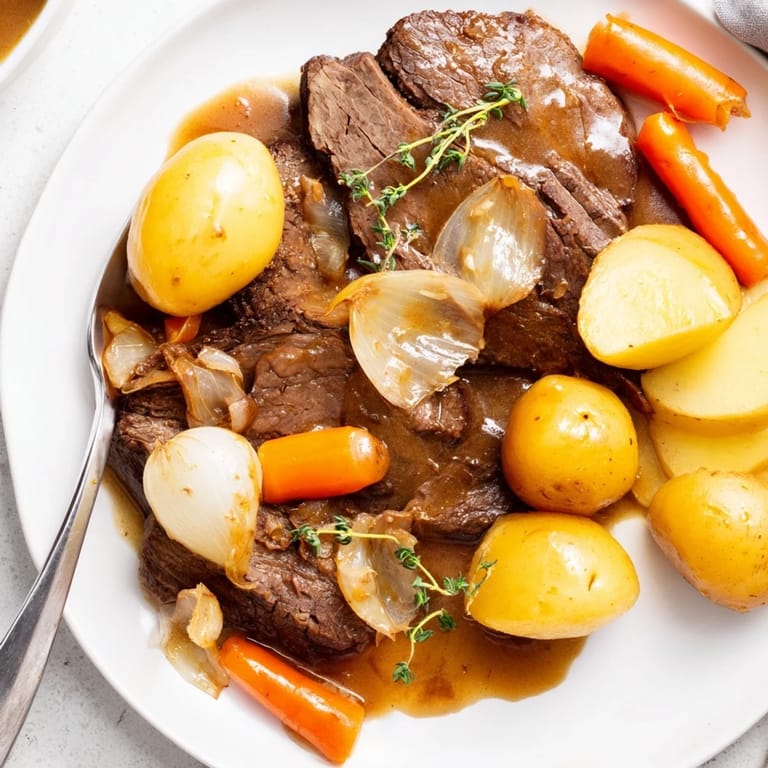
Save My grandmother never wrote down her pot roast recipe. It was one of those dishes she made by feel, by smell, by the way the house should smell on a Sunday afternoon. When I finally asked her for the method, she waved her hand and said 'put it in the pot with some wine and forget about it for three hours.' That's the secret really.
Last winter, my neighbor came over with her two kids when this was bubbling away. Her youngest stood on a chair watching through the oven window, mesmerized by the way the vegetables bobbed in the dark liquid. They stayed for dinner, and I learned that pot roast has this magical way of making unexpected company feel like planned company.
Ingredients
- Chuck roast: This cut has enough marbling to stay tender through long cooking, and I've learned that slightly fattier roasts make better gravy
- Yukon Gold potatoes: They hold their shape better than Russets and have a naturally buttery flavor that needs no help
- Red wine: The acid breaks down tough fibers in the beef and adds complexity, but extra broth works fine if you prefer not to cook with wine
- Tomato paste: Don't skip this step, it creates a rich base note that makes the gravy taste like it simmered all day
- Dried thyme: Fresh is lovely but dried actually works better here since it holds up to the long cooking time
Tired of Takeout? 🥡
Get 10 meals you can make faster than delivery arrives. Seriously.
One email. No spam. Unsubscribe anytime.
Instructions
- Get everything ready first:
- Pat that roast completely dry with paper towels, then season it generously with salt and pepper on all sides
- Build the foundation:
- Heat your olive oil in a large Dutch oven over medium-high heat and sear the roast for about 4 to 5 minutes per side until it's deeply browned
- Create the flavor base:
- Sauté the onions and garlic for 2 to 3 minutes until they're fragrant, then stir in the tomato paste and let it cook for a full minute
- Build the braising liquid:
- Pour in the wine and scrape up all those gorgeous browned bits from the bottom, then return the beef and add broth, Worcestershire, thyme, and bay leaves
- Add the vegetables:
- Arrange the potatoes and carrots around the roast, tucking them in so they're mostly submerged in the liquid
- Let it transform:
- Cover the pot and braise in a 300°F oven for 3 to 3½ hours until the beef yields easily to a fork
- Finish with gravy:
- Whisk flour with cold water until smooth, stir it into the simmering liquid, and cook until it thickens into something worthy of pouring over everything
 Save
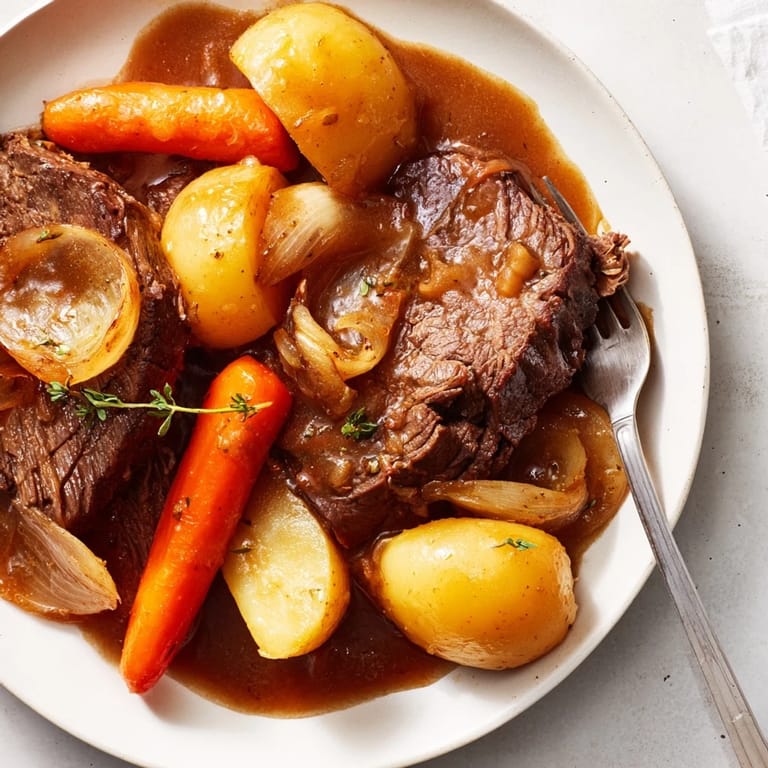
Save My daughter requested this for her birthday dinner instead of anything fancy. That's when I realized comfort food sometimes trumps celebration food in the best way possible.
Choosing The Right Cut
Chuck roast is the gold standard for pot roast because it comes from the shoulder, a muscle that does a lot of work and develops incredible flavor. Look for marbling throughout, not just on the edges, and avoid anything labeled as round, which tends to dry out during long cooking.
Making It Ahead
Pot roast improves with time, making it perfect for weekend meal prep. Cook it completely, cool it, and refrigerate overnight. The fat will solidify on top for easy removal, and the flavors will have married beautifully. Reheat gently on the stove.
Serving Suggestions
A hunk of crusty bread is non-negotiable for soaking up that gravy. If you want something green, steamed green beans or roasted broccoli cut through the richness. And honestly, nothing beats the simplicity of buttered noodles.
- Leftover gravy freezes beautifully for up to three months
- Serve in shallow bowls to catch all the juices
- A crisp green salad with acidic dressing balances the meal
 Save
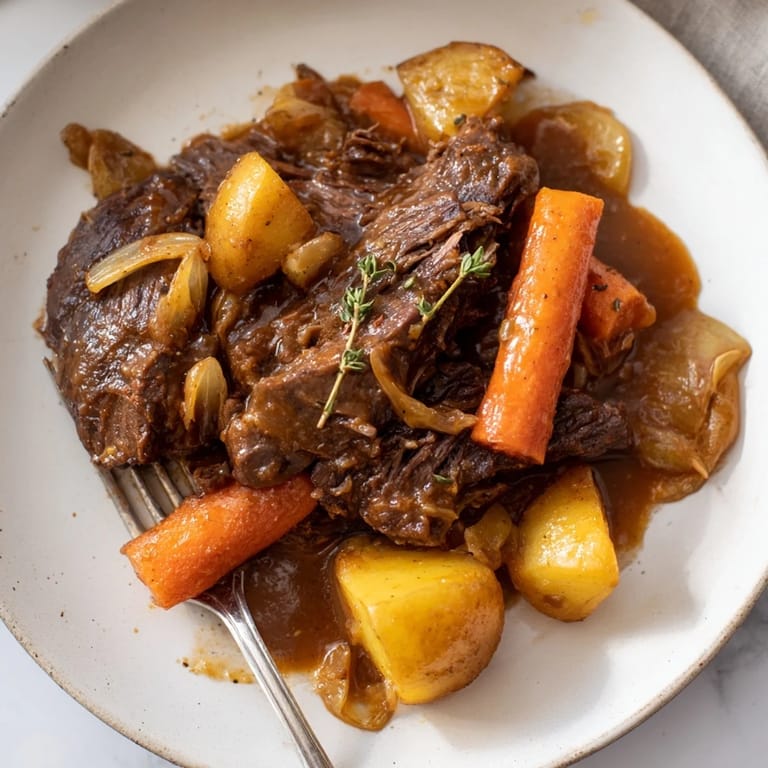
Save There's something profoundly satisfying about a dish that takes care of itself, leaving you free to set a nice table and actually be present with the people you're feeding.
Recipe FAQs
- → What cut of beef works best for pot roast?
Chuck roast is the ideal choice because it has plenty of marbling and connective tissue that breaks down during slow cooking, resulting in incredibly tender meat. The 3-4 pound size ensures even cooking and provides generous portions.
- → Can I make this on the stovetop instead of the oven?
Yes, you can braise everything on the stovetop over low heat. Maintain a gentle simmer and cook for the same 3-3½ hour timeframe, checking occasionally to ensure the liquid doesn't evaporate too quickly.
- → What vegetables pair well with pot roast?
Beyond the classic potatoes and carrots, parsnips, celery root, or turnips add wonderful flavor. Add these hearty vegetables during the last hour of cooking so they don't become mushy.
- → How do I store and reheat leftovers?
Store in an airtight container in the refrigerator for up to 4 days. The flavors often improve after sitting. Reheat gently on the stovetop with a splash of broth to maintain the gravy's consistency.
- → Can I freeze pot roast?
Absolutely. Cool completely, then freeze in portions with plenty of gravy for up to 3 months. Thaw overnight in the refrigerator before reheating slowly on the stovetop.