 Save
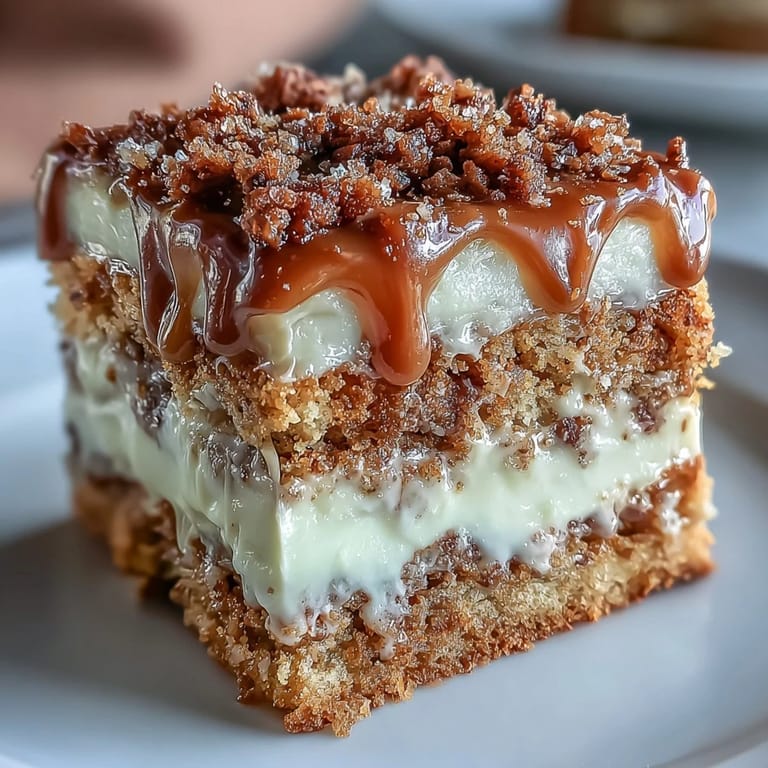
Save I baked this cake on a grey Saturday when the house felt too quiet and I needed something warm to fill it. The smell of caramelized spice from the Biscoff biscuits mixed with vanilla as the oven worked, and by the time I pulled it out, my neighbor had knocked to ask what I was making. That cake, still warm and crumbly at the edges, became the reason we sat together that afternoon with mugs of coffee and talked until the light changed.
The first time I made this for a dinner party, I ran out of time to decorate it properly and just smeared frosting on top with the back of a spoon. Everyone still went quiet after the first bite, and one friend asked if I'd consider making it for her birthday. I realized then that this cake didn't need perfection, it just needed to taste like comfort and caramel and something you wanted more of.
Ingredients
- Biscoff biscuits, crushed: These bring the signature spiced cookie flavor and little pockets of crunch throughout the cake, I crush mine by hand in a bag so some pieces stay bigger.
- All purpose flour: The structure of the cake, sifted so it stays light and doesn't turn dense when you fold everything together.
- Baking powder and baking soda: They work as a team to give you rise and a tender crumb, don't skip the soda or the cake will taste flat.
- Salt: Just a pinch to balance all that sweetness and make the caramel notes in the Lotus spread come forward.
- Unsalted butter, softened: Creaming this with sugar is what gives the cake its fluffy texture, make sure it's truly soft or it won't blend smoothly.
- Granulated sugar: Sweetens and helps create that light, airy batter when beaten with butter until it looks almost like whipped cream.
- Large eggs: They bind everything and add richness, I always let mine come to room temperature so they mix in without curdling.
- Vanilla extract: A warm background note that supports the spice without competing with it.
- Whole milk: Keeps the batter moist and pourable, low fat milk works but whole gives you a softer crumb.
- Lotus spread (Biscoff spread): This is the heart of the recipe, swirled into the batter and whipped into the frosting for double the caramelized cookie flavor.
- Powdered sugar: Sweetens the frosting and gives it that silky texture you can spread or pipe easily.
- Heavy cream or milk: Loosens the frosting just enough so it's creamy instead of stiff, add it slowly until you like the consistency.
Tired of Takeout? 🥡
Get 10 meals you can make faster than delivery arrives. Seriously.
One email. No spam. Unsubscribe anytime.
Instructions
- Prep your pan and preheat:
- Set your oven to 180°C (350°F) and grease your 9 inch round pan well, then dust it with flour or line the bottom with parchment. This step matters because Lotus spread can make the cake a little sticky.
- Sift the dry ingredients:
- Combine flour, baking powder, baking soda, and salt in a bowl and sift them together so there are no lumps. Set this aside while you work on the wet ingredients.
- Cream butter and sugar:
- Beat softened butter and granulated sugar with an electric mixer on medium speed for 3 to 5 minutes until the mixture looks pale and fluffy. This is where the cake gets its lightness, so don't rush it.
- Add eggs and vanilla:
- Crack in the eggs one at a time, beating well after each one, then stir in the vanilla extract. The batter should look smooth and glossy now.
- Alternate dry and wet:
- Add the flour mixture in three parts, alternating with the milk, starting and ending with flour. Mix just until you can't see dry streaks, overmixing makes the cake tough.
- Fold in Biscoff and spread:
- Gently fold the crushed biscuits and Lotus spread through the batter with a spatula until they're evenly distributed. You want ribbons of spread and little crunchy bits throughout.
- Pour and smooth:
- Scrape the batter into your prepared pan and smooth the top with the back of a spoon. Tap the pan lightly on the counter to release any air bubbles.
- Bake until set:
- Slide the pan into the oven and bake for 35 to 40 minutes, checking with a toothpick in the center. It should come out clean or with just a few moist crumbs.
- Cool completely:
- Let the cake rest in the pan for 10 minutes, then turn it out onto a wire rack. It needs to be fully cool before you frost it or the frosting will melt and slide off.
- Make the frosting base:
- Beat softened butter in a clean bowl until smooth and creamy. Gradually add powdered sugar on low speed so it doesn't puff up into a cloud.
- Add Lotus and cream:
- Beat in the Lotus spread, a pinch of salt, and 2 to 3 tablespoons of heavy cream or milk. Increase speed to medium high and whip for 3 minutes until fluffy, adding more cream if it's too thick to spread.
- Frost and decorate:
- Once the cake is cool, spread or pipe the frosting over the top and sides if you like. Sprinkle with extra crushed Biscoff or drizzle warm Lotus spread over the top for a bakery look.
- Slice and serve:
- Cut into wedges and serve at room temperature. The frosting softens as it sits, making each slice even creamier.
 Save
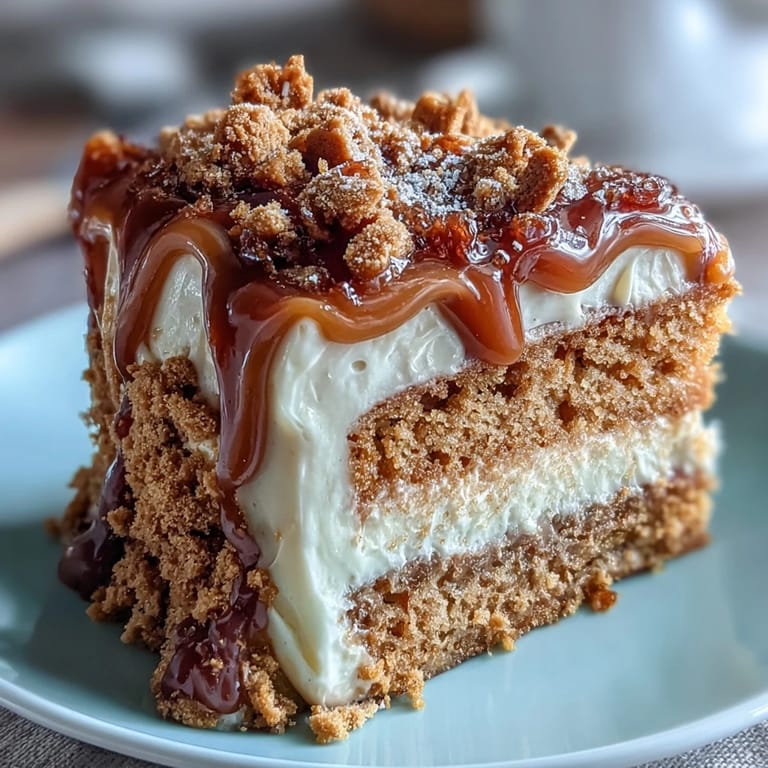
Save I brought this cake to a potluck once and watched people come back for seconds without saying much, just nodding as they chewed. One woman asked for the recipe and told me later she made it for her daughter's birthday and it became the new family favorite. That's when I realized this wasn't just my cake anymore, it belonged to anyone who needed something sweet and a little nostalgic to share.
Storing and Keeping It Fresh
This cake stays moist for up to three days in an airtight container at room temperature, which makes it perfect for baking ahead. I've found that the frosting softens slightly as it sits, and the flavors meld together in a way that makes day two even better than day one. If your kitchen is very warm, you can refrigerate it, but let it come to room temperature before serving so the frosting doesn't feel stiff.
Ways to Make It Your Own
I've folded dark chocolate chips into the batter when I wanted something a little richer, and I've swapped half the Biscoff biscuits for chopped pecans when I had them on hand. A friend of mine adds a tablespoon of espresso powder to the batter for a deeper flavor, and another swirls Nutella through the frosting for a hazelnut twist. This cake is forgiving enough to handle your ideas, so don't be afraid to experiment with what you love.
Serving Suggestions and Pairings
I almost always serve this with strong black coffee or a pot of Earl Grey, the slight bitterness cuts through the sweetness and makes each bite feel balanced. It's also beautiful with a scoop of vanilla ice cream on the side, especially if you warm a slice for a few seconds in the microwave so the frosting gets glossy and soft.
- Pair with hot coffee, tea, or a glass of cold milk for contrast.
- Serve with vanilla ice cream or whipped cream for extra indulgence.
- Drizzle warm Lotus spread over individual slices just before serving for a bakery style finish.
 Save
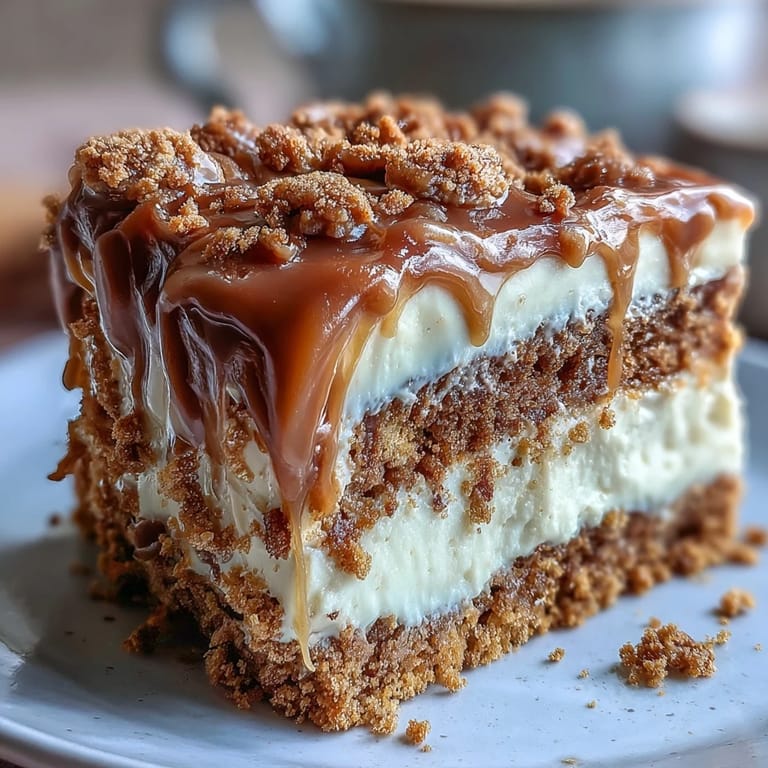
Save This cake has become the one I make when I want to feel like I'm giving someone something special without spending all day in the kitchen. It's rich, comforting, and tastes like the kind of dessert you'd find in a quiet European café, and that's exactly what makes it worth baking again and again.
Recipe FAQs
- → What makes Biscoff spread special in baking?
Lotus Biscoff spread brings a unique caramelized biscuit flavor that's difficult to replicate with other ingredients. Its smooth, creamy texture incorporates beautifully into frostings while maintaining that distinctive European cookie spice profile.
- → Can I make the sponge ahead of time?
Absolutely. Bake the sponge layers up to 24 hours in advance, wrap tightly in plastic wrap once completely cooled, and store at room temperature. Frost just before serving for the freshest texture and appearance.
- → Why is my frosting too thick or thin?
Temperature affects consistency significantly. If your butter or Lotus spread is too warm, the frosting becomes loose. Chill for 15-20 minutes and rewhip. If too thick, add cream one teaspoon at a time until you reach spreading consistency.
- → What's the best way to crush Biscoff biscuits?
Place biscuits in a sealed zip-top bag and crush with a rolling pin for varied textures—some fine crumbs, some larger pieces. For uniform fine crumbs, pulse briefly in a food processor. Both methods work well for this sponge.
- → Can I freeze this cake?
Yes! Wrap unfrosted sponge layers tightly in plastic wrap, then foil, and freeze for up to 3 months. Thaw overnight at room temperature before frosting. Frosted cakes can be frozen for 1-2 months if well-wrapped, though fresh frosting tastes best.
- → What beverages pair well with this dessert?
The caramel notes sing alongside strong espresso, cappuccino, or black tea. For something more indulgent, try with a caramel latte or spiced chai. The biscuit warmth also complements dessert wines like tawny port nicely.