 Save
Save My grandmother's kitchen smelled like this dish every Sunday without fail—onions caramelizing in cast iron while chicken sizzled until golden, filling the whole house with a warmth that had nothing to do with the stove. Years later, I finally asked her the secret, expecting something exotic, but it was simpler than that: patience with the onions and never rushing the gravy. That first time I made it alone, I burned the flour roux trying to hurry, but the second attempt taught me everything about listening to the sizzle and trusting the process.
I made this for a dinner party once when I was still nervous about cooking for guests, and halfway through simmering, a friend wandered into the kitchen asking what smelled so incredible. By the time everyone sat down, they were already sold before tasting a single bite. That meal became the one people still ask me to make, not because it's complicated, but because it somehow feels like being taken care of.
Ingredients
- Bone-in, skin-on chicken thighs and drumsticks: These cuts stay moist during the long simmer and their bones add serious depth to the gravy, so resist the urge to use breasts.
- All-purpose flour (for breading and gravy): The same flour does double duty, and that's no accident—it keeps things simple while building layers of flavor.
- Salt, black pepper, paprika, garlic powder, onion powder: This seasoning blend goes on the chicken twice (before and after breading), ensuring flavor hits every bite.
- Vegetable oil: Use something neutral with a high smoke point so the skin crisps without burning.
- Large yellow onions: They need to be sliced thin and cooked low and slow until they're almost melting into the gravy.
- Low-sodium chicken broth: This lets the chicken and onions shine, though homemade stock makes everything taste like someone's been cooking all day.
- Dried thyme, paprika: These are optional but they add an herbal whisper that makes people ask what your secret is.
- Unsalted butter: Finish the gravy with this for silkiness that store-bought gravy can't touch.
Tired of Takeout? 🥡
Get 10 meals you can make faster than delivery arrives. Seriously.
One email. No spam. Unsubscribe anytime.
Instructions
- Get your chicken ready:
- Pat each piece completely dry with paper towels—this is what makes the skin crisp later. Sprinkle all sides generously with salt, pepper, paprika, garlic powder, and onion powder, really making sure you coat the undersides.
- Set up your dredging station:
- Mix flour, salt, and black pepper in a shallow bowl. Working with one piece at a time, coat the chicken thoroughly, shake off the excess, and set aside on a plate—you're building a protective layer that will turn golden.
- Fry the chicken until golden:
- Heat oil over medium heat until it shimmers slightly, then lay chicken skin-side down. Let it sit undisturbed for 6 to 8 minutes so the skin crisps up beautifully, then flip and cook the other side the same way. The chicken won't be fully cooked yet—that's intentional.
- Start the onion magic:
- Leave about 2 tablespoons of oil in the pan and toss in your thinly sliced onions. Stir them frequently over medium heat, watching them transform from sharp and raw to sweet and golden after 8 to 10 minutes. This is where patience actually tastes good.
- Build the gravy base:
- Sprinkle the reserved flour over the onions and stir constantly for a minute or two until it turns light brown and smells nutty. This roux is your thickening agent and flavor foundation, so don't skip this step.
- Whisk in the broth:
- Pour the broth in slowly while whisking steadily, scraping up all the browned bits stuck to the bottom of the pan—that's pure flavor. Add thyme, paprika, salt, pepper, and butter, then let it simmer for a few minutes until it thickens and coats the back of a spoon.
- Finish cooking low and gentle:
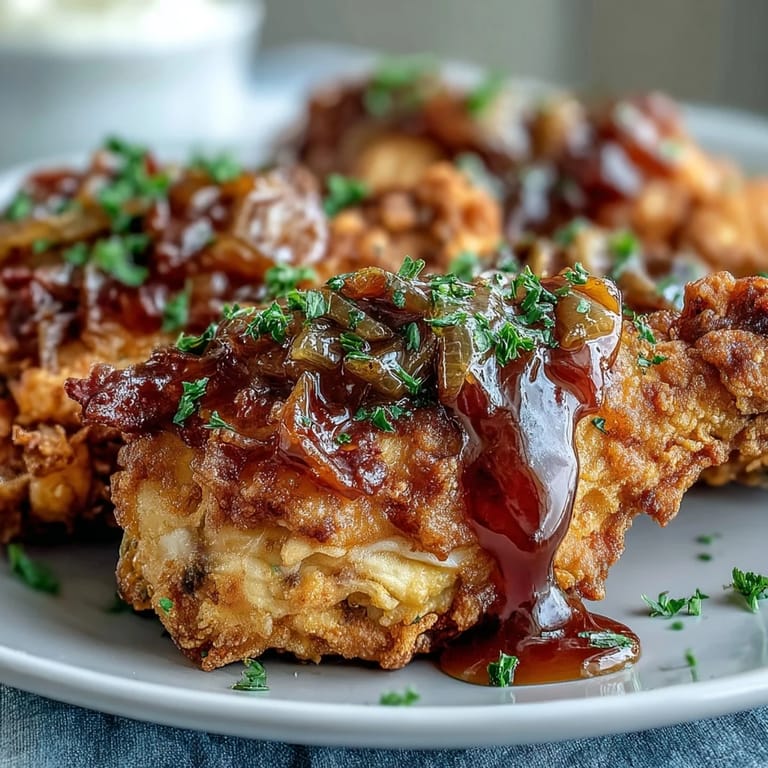
- Nestle the browned chicken pieces back into the gravy, spooning some over each one. Cover the skillet, turn heat to low, and let everything simmer together for 25 to 30 minutes until the chicken is fall-off-the-bone tender and registers 165°F on a meat thermometer.
- Serve with generosity:
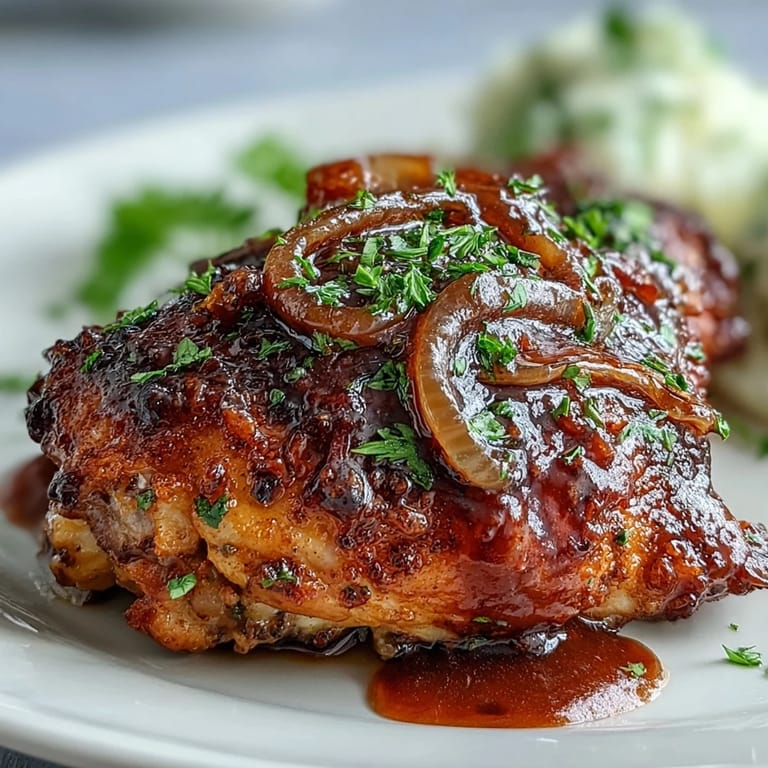
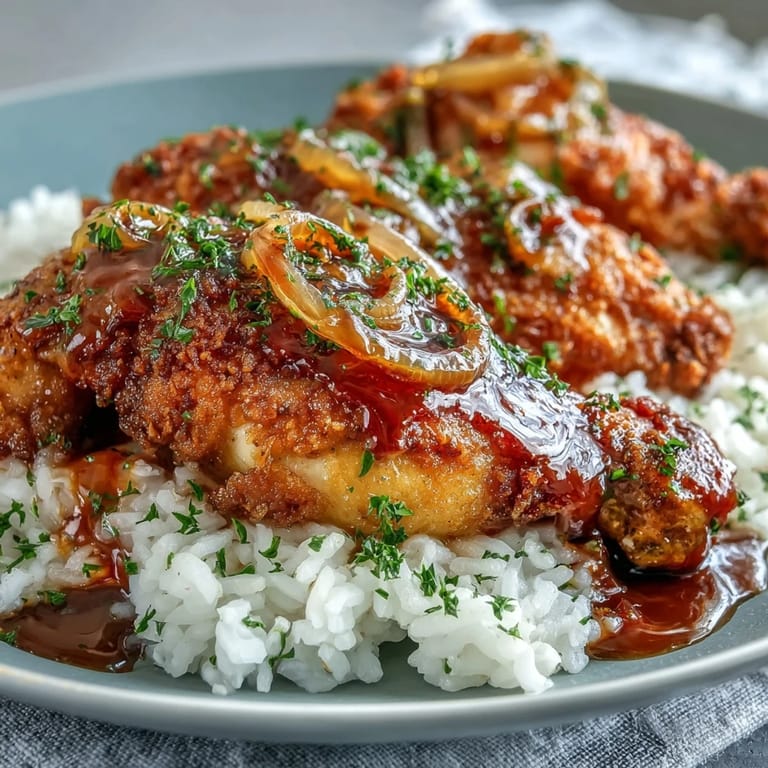
- Spoon that onion gravy over everything like you're blessing each plate. Serve hot with mashed potatoes, rice, or collard greens so nothing goes to waste.
 Save
Save There was an afternoon when my neighbor came over as I was finishing this dish, drawn in by the smell without even knocking. We ended up eating at my kitchen counter instead of at the table, and he told me this was the first time in months he'd sat somewhere that felt like home. That's when I understood this recipe isn't really about technique—it's about what happens when food smells like care.
Why the Skin Matters
Crispy skin is your contrast to all that soft, saucy goodness underneath, and that contrast is what makes your mouth happy. Leaving the skin on keeps the meat underneath juicy while the pan gives it a golden crust that stays textured even after swimming in gravy. When you bite into it, you get this moment of crunch followed by tenderness, and that textural surprise is what separates this from just boiled chicken in sauce.
Making It Your Own
This is a recipe that welcomes changes based on what you have and what you love. Some people add a splash of apple cider vinegar to the gravy for brightness, others throw in mushrooms that soften in the sauce, and I once added a teaspoon of hot sauce because I was feeling that kind of mood. The skeleton of the dish—browned chicken, caramelized onions, simple gravy—stays solid no matter what you improvise around it.
Timing and Serving Strategy
This meal actually gets better if you make it a few hours ahead and reheat it gently, because the flavors settle in and deepen overnight in the fridge. When you're ready to eat, warm it low and slow so nothing toughens up, and that's when you realize this is a recipe that actually rewards you for planning ahead. The whole thing comes together in just over an hour if you're cooking fresh, but the payoff lasts through multiple meals if you have leftovers.
- Cook the onions until they're properly caramelized, not just softened, for gravy that tastes like someone spent hours on it.
- Use a meat thermometer to know when the chicken is done instead of guessing, because overcooked chicken is the one thing that can't be fixed.
- Serve it in shallow bowls so there's plenty of gravy to soak into whatever starch you're using alongside it.
 Save
Save Every time I make this, I'm making it for someone—even if that someone is just future me, hungry and tired. This recipe never pretends to be anything fancy; it's honest food that tastes like someone cares, and that might be the whole point.
Recipe FAQs
- → What type of chicken is best for smothering?
Bone-in, skin-on thighs and drumsticks are preferred for their flavor and tenderness during slow cooking.
- → How do I achieve a thick onion gravy?
Cook sliced onions slowly until golden, then add flour to brown before whisking in chicken broth; simmer until thickened.
- → Can I use boneless chicken?
Yes, boneless chicken can be used but reduce simmering time to avoid overcooking.
- → What side dishes complement this dish?
Classic sides include mashed potatoes, rice, or collard greens to soak up the rich gravy.
- → Is it necessary to fry the chicken before simmering?
Frying adds a golden crust and extra flavor but chicken is not fully cooked until simmered in the gravy.
- → Can I add spice to the dish?
A pinch of cayenne pepper in the breading flour adds a gentle heat without overpowering the flavors.