 Save
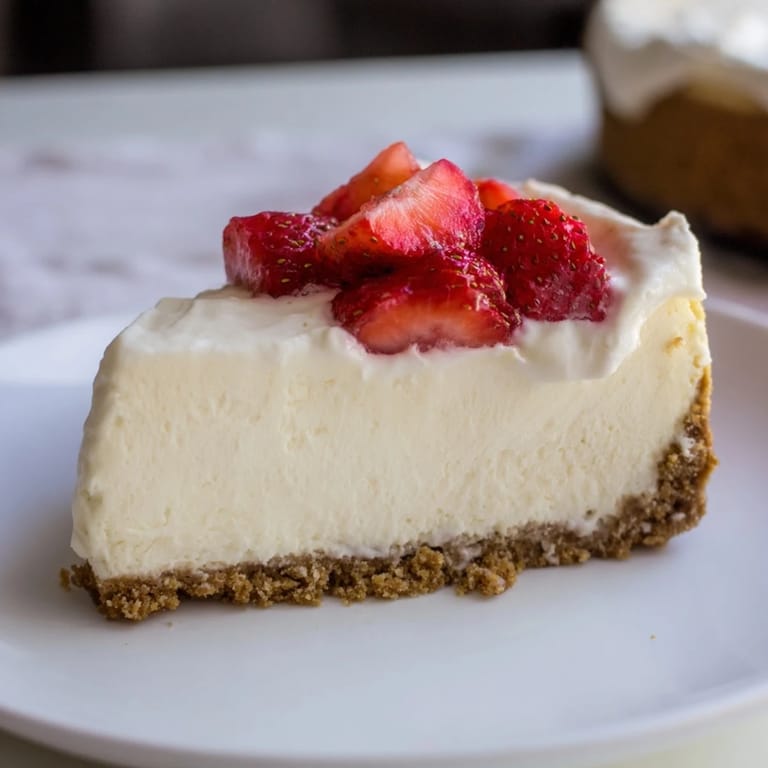
Save Indulge in the ultimate dessert experience with this classic New York Cheesecake. Renowned for its incredibly rich, dense, and creamy texture, this recipe delivers a perfect balance of tangy sweetness atop a buttery graham cracker crust. It's the kind of show-stopping dessert that makes any occasion feel truly special.
Save The secret to this cheesecake's flawless texture lies in patience and technique. Using room temperature ingredients ensures a smooth, lump-free filling, while a gentle water bath and slow cooling process prevent cracks, yielding a pristine, creamy slice every time.
Ingredients
Tired of Takeout? 🥡
Get 10 meals you can make faster than delivery arrives. Seriously.
One email. No spam. Unsubscribe anytime.
- For the Crust
- 200 g (2 cups) graham cracker crumbs
- 100 g (7 tbsp) unsalted butter, melted
- 2 tbsp granulated sugar
- Pinch of salt
- For the Filling
- 900 g (2 lbs) full-fat cream cheese, at room temperature
- 200 g (1 cup) granulated sugar
- 240 ml (1 cup) sour cream, at room temperature
- 3 large eggs, at room temperature
- 1 tbsp cornstarch
- 2 tsp pure vanilla extract
- 1 tbsp fresh lemon juice
- 1/4 tsp salt
- For the Topping (optional)
- 240 ml (1 cup) sour cream
- 2 tbsp powdered sugar
- 1/2 tsp vanilla extract
Instructions
- Step 1
- Preheat your oven to 160°C (325°F). Grease a 23 cm (9-inch) springform pan and line the base with parchment paper.
- Step 2
- In a bowl, combine graham cracker crumbs, melted butter, sugar, and a pinch of salt. Mix until the texture resembles wet sand.
- Step 3
- Press the mixture firmly into the bottom of the prepared pan. Bake for 10 minutes, then set aside to cool slightly.
- Step 4
- In a large mixing bowl, beat the cream cheese until smooth and creamy, about 2 minutes. Add sugar and continue beating until well combined.
- Step 5
- Mix in sour cream, vanilla, lemon juice, cornstarch, and salt until just incorporated.
- Step 6
- Add eggs one at a time, mixing on low speed and scraping the bowl after each addition. Do not overmix.
- Step 7
- Pour the filling over the cooled crust and smooth the top with a spatula.
- Step 8
- Place the pan in a larger roasting pan and pour hot water into the outer pan to create a water bath, reaching halfway up the sides of the springform pan.
- Step 9
- Bake for 55–65 minutes, until the edges are set but the center still jiggles slightly.
- Step 10
- Turn off the oven, crack the door open, and let the cheesecake cool in the oven for 1 hour.
- Step 11
- Remove from the oven, run a knife around the edge, and let cool to room temperature. Refrigerate for at least 6 hours or overnight.
- Step 12
- For the topping (optional): Mix sour cream, powdered sugar, and vanilla. Spread over the chilled cheesecake.
- Step 13
- Slice with a hot, clean knife and serve.
Zusatztipps für die Zubereitung
Für das beste Ergebnis und eine klumpenfreie Füllung ist es entscheidend, dass alle Zutaten, insbesondere Frischkäse, Sauerrahm und Eier, Raumtemperatur haben. Dies erleichtert das Vermengen und sorgt für eine gleichmäßige, cremige Textur.
Varianten und Anpassungen
Für eine köstliche Schokoladen-Note können Sie kurz vor dem Backen geschmolzene Schokolade in die Füllung einstrudeln. Dies verleiht dem Cheesecake eine wunderschöne Marmorierung und einen reichen Schokoladengeschmack.
Serviervorschläge
Servieren Sie den Cheesecake pur oder garnieren Sie ihn mit frischen Beeren oder einem Fruchtkompott. Er passt auch hervorragend zu einem starken Kaffee oder einem Glas Spätlese-Riesling.
 Save
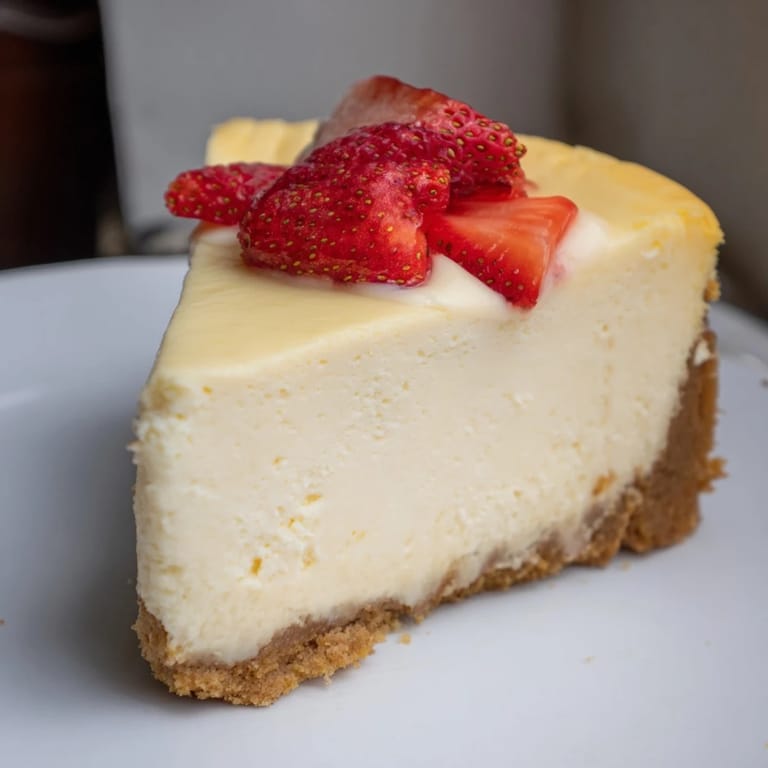
Save With the final slice served, the rich aroma of vanilla and baked cream cheese lingers. This New York Cheesecake isn't just a dessert; it's a rewarding baking project that culminates in a truly luxurious and memorable treat, perfect for sharing with loved ones.
Recipe FAQs
- → Why is room temperature cream cheese important?
Room temperature cream cheese blends smoothly without lumps, creating that signature velvety texture. Cold ingredients can result in a grainy filling and may require overmixing, which introduces unwanted air bubbles.
- → What is the purpose of the water bath?
The water bath provides gentle, even heat distribution that prevents the cheesecake from cracking, puffing, or over-browning. It creates a humid environment allowing the filling to cook slowly and uniformly.
- → How long should the cheesecake chill before serving?
Refrigerate for at least 6 hours, though overnight chilling yields the best results. This extended resting period allows the flavors to develop and the texture to set completely for clean slicing.
- → Why does the cheesecake crack when cooling?
Rapid temperature changes cause cracking. Cooling gradually in the oven with the door cracked prevents thermal shock. Running a knife around the edge immediately after baking also helps release tension as it contracts.
- → Can I make this ahead of time?
Absolutely. This cheesecake actually improves after 24-48 hours in the refrigerator as flavors meld and texture becomes even creamier. Wrap tightly and it will keep for up to 5 days.
- → Why should I avoid overmixing the eggs?
Overmixing incorporates air bubbles that expand during baking, causing the cheesecake to puff and then collapse, leading to cracks and a denser, less creamy texture.