 Save
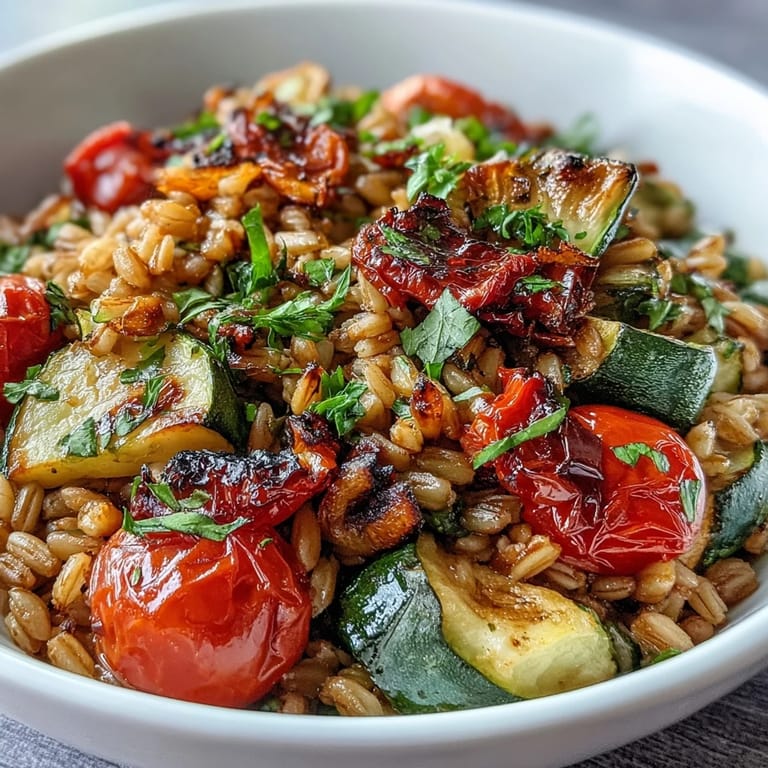
Save There's something almost meditative about watching vegetables transform in a hot oven—the way a plain bell pepper becomes glossy and caramelized, its edges catching char like tiny sweet promises. I discovered farro while browsing a farmers market one autumn, drawn to its chubby grain shape and the vendor's promise that it would stay chewy, never mushy. That first bowl, tossed warm with roasted vegetables and a whisper of balsamic, became my answer to those evenings when I wanted something substantial but not heavy, nourishing without fuss.
I made this for a potluck once, nervous because the host had mentioned a guest with dietary restrictions I'd somehow misunderstood. Turns out it was naturally vegan when I skipped the feta, and watching someone light up while eating something I'd made, not realizing it checked every box they needed, taught me that the best recipes are the ones that work for everyone at the table.
Ingredients
- Farro: This chewy whole grain has an almost nutty flavor that pairs perfectly with caramelized vegetables, and unlike some grains it won't turn into porridge if you cook it a few minutes too long.
- Vegetable broth: Use a good quality broth if you can—it's the only seasoning the farro gets and it makes a real difference in the final dish.
- Bell pepper: Red ones are sweeter than green, and the color deepens beautifully when roasted.
- Zucchini: Cut it the same size as your other vegetables so everything roasts evenly and finishes at the same time.
- Red onion: The wedges caramelize into something almost candy-like while keeping their structure.
- Carrot: Slice thinner than the other vegetables since they take longer to soften.
- Cherry tomatoes: Add these halfway through roasting so they don't burst and dry out completely.
- Dried thyme and oregano: These are essential to building flavor while everything roasts—don't skip them even if fresh herbs are more elegant.
- Extra-virgin olive oil for dressing: Save your good oil for the finish where you can actually taste it.
- Balsamic vinegar: Just a touch brings everything into focus, especially the natural sweetness of the roasted vegetables.
- Fresh parsley: A handful stirred in at the end adds brightness and keeps the dish from feeling heavy.
- Feta cheese: Optional but the salty brine cuts through the richness of the oil beautifully, though the dish is equally lovely without it.
Tired of Takeout? 🥡
Get 10 meals you can make faster than delivery arrives. Seriously.
One email. No spam. Unsubscribe anytime.
Instructions
- Get your oven ready and prep the vegetables:
- Heat your oven to 425°F and line a baking sheet with parchment paper so cleanup is easier later. While it preheats, dice your bell pepper and zucchini into roughly the same size pieces, cut your red onion into thick wedges, slice your carrot, and halve the cherry tomatoes—uniformly sized pieces roast more evenly.
- Season and spread on the sheet:
- Toss all your vegetables except the cherry tomatoes with 2 tablespoons of olive oil, dried thyme, oregano, salt, and pepper, then spread them in a single layer on the baking sheet. You want them to make contact with the hot pan so they can caramelize, not steam.
- Roast until golden and tender:
- Slide everything into the oven and set a timer for 15 minutes, then give the pan a good shake or stir. Add your cherry tomatoes now, then roast for another 10-15 minutes until the edges are darkened and caramelized and everything is soft enough to eat but still holding its shape.
- Cook the farro while vegetables roast:
- Rinse your farro under cold running water—this removes a bit of the starch and helps it cook more evenly. In a medium saucepan, combine the farro with 3 cups of vegetable broth and bring it to a boil, then reduce heat to a gentle simmer, cover the pot, and let it cook for 25-30 minutes until the grains are tender but still have a slight chew to them.
- Combine warm farro and roasted vegetables:
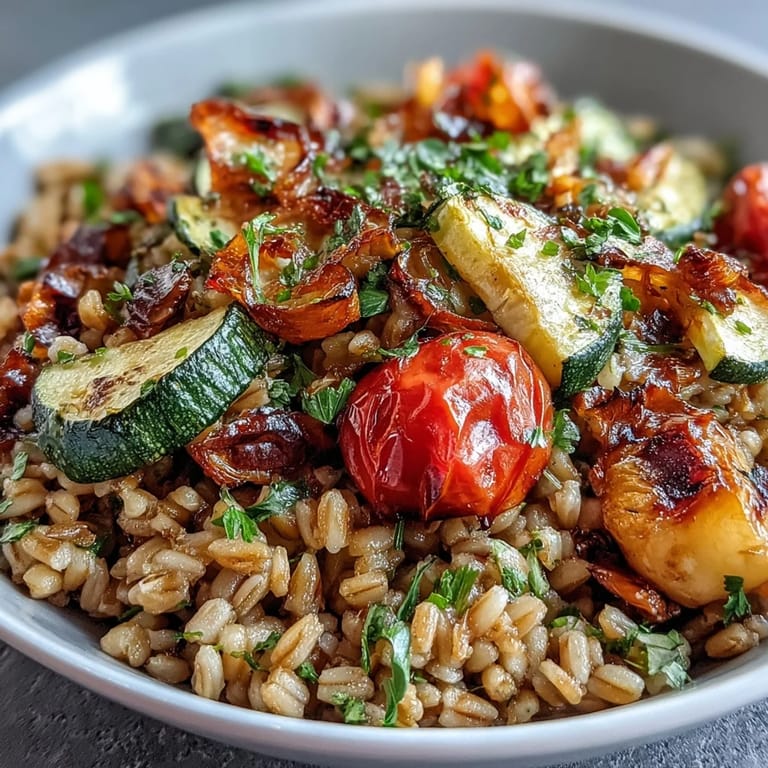
- Once the farro is cooked, drain any excess liquid if needed, then transfer it to a large bowl. Add the warm roasted vegetables, 2 tablespoons of extra-virgin olive oil, and 1 tablespoon of balsamic vinegar, then toss everything together gently so you don't break up the vegetables.
- Finish with fresh herbs and optional cheese:
- Stir in your chopped fresh parsley and taste for seasoning, adjusting salt and pepper as needed. Crumble feta over the top if you're using it, then serve while still warm or let it cool to room temperature.
 Save
Save My partner's mother asked for this recipe after tasting it once, which never happens—she's the type who perfected her own dishes decades ago and rarely looks at new ones. Seeing her write it down on the back of an envelope made me realize that sometimes the best cooking isn't about complicated technique, it's just about treating good ingredients with respect.
Vegetable Swaps That Work Beautifully
The magic of this dish is how flexible it really is once you understand the principle—you want vegetables that caramelize well when roasted. Eggplant becomes silky and almost meaty, butternut squash turns jammy and sweet, mushrooms shrivel into umami bombs, and even Brussels sprouts work if you halve them first. I've made this dish across four seasons with whatever looked good at the market, and it's never disappointed me once.
Making It Your Own
Once you've made this once, you'll start seeing variations everywhere. Add a squeeze of lemon juice for brightness, toss in some toasted pine nuts for crunch, or stir in a handful of fresh mint instead of parsley for something completely different. The farro is sturdy enough to handle bold flavors, so don't be shy about adapting it to what sounds good to you.
Serving and Storage Wisdom
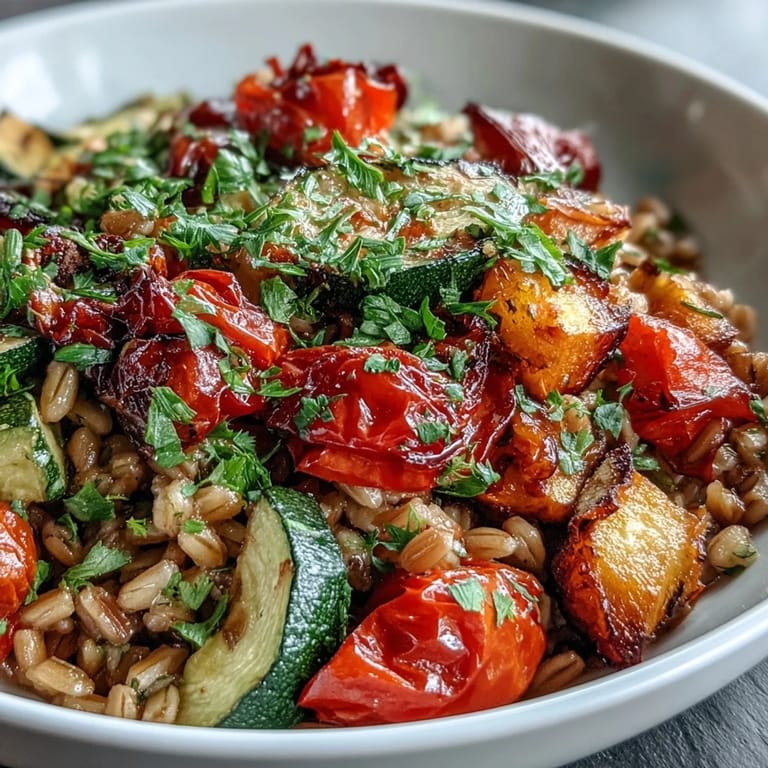
This dish is genuinely good warm, room temperature, or even cold the next day—it's the kind of thing that works for lunch boxes and picnics just as well as it does for dinner. The flavors actually deepen as it sits and the grains continue absorbing the dressing, so leftovers are never a sad compromise.
- Store any extras in an airtight container in the refrigerator for up to four days and stir in a splash of olive oil before serving if it seems dry.
- If you're bringing this to a potluck, transport it in the serving bowl and add the fresh parsley right before people eat so it stays bright and green.
- For a heartier main course, serve it alongside grilled chicken, baked fish, or crumbled tempeh instead of as a standalone dish.
 Save
Save This is the kind of recipe that quietly became part of my regular rotation, not because it's fancy, but because it's honest and satisfying and asks for almost nothing in return except a little attention while things roast. Make it once and I think you'll understand why.
Recipe FAQs
- → What does farro taste like?
Farro has a nutty, slightly sweet flavor with a satisfyingly chewy texture similar to barley but slightly more tender. It absorbs flavors beautifully while maintaining its shape.
- → Can I make this ahead of time?
Absolutely. This dish actually tastes better the next day as flavors meld together. Store in an airtight container in the refrigerator for up to 5 days. Serve warm, at room temperature, or cold.
- → Is farro gluten-free?
No, farro contains gluten as it's a type of wheat. For a gluten-free alternative, try quinoa, brown rice, or buckwheat groats with the same roasting method.
- → What vegetables work best for roasting?
Root vegetables, bell peppers, zucchini, eggplant, onions, and cherry tomatoes all roast beautifully. Choose vegetables that cook at similar rates, cutting harder vegetables into smaller pieces.
- → Do I need to soak farro before cooking?
Soaking isn't required but can reduce cooking time by 10-15 minutes. Simply rinse thoroughly before cooking to remove any debris or dust.
- → How do I know when farro is done cooking?
Farro is ready when it's tender but still retains a slight chew in the center. Taste test near the end of cooking time—al dente texture is ideal for grain bowls.