 Save
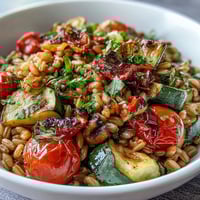
Save One Tuesday afternoon, I found myself staring at a nearly empty vegetable drawer, wondering what could possibly fill the gap between lunch and dinner. My hand reached for a box of quinoa I'd been meaning to try, and something clicked—what if I roasted everything until it turned golden and sweet, then tossed it all together with those little pale grains? That first forkful was revelatory: fluffy, warm, and somehow both light and deeply satisfying in a way that surprised me.
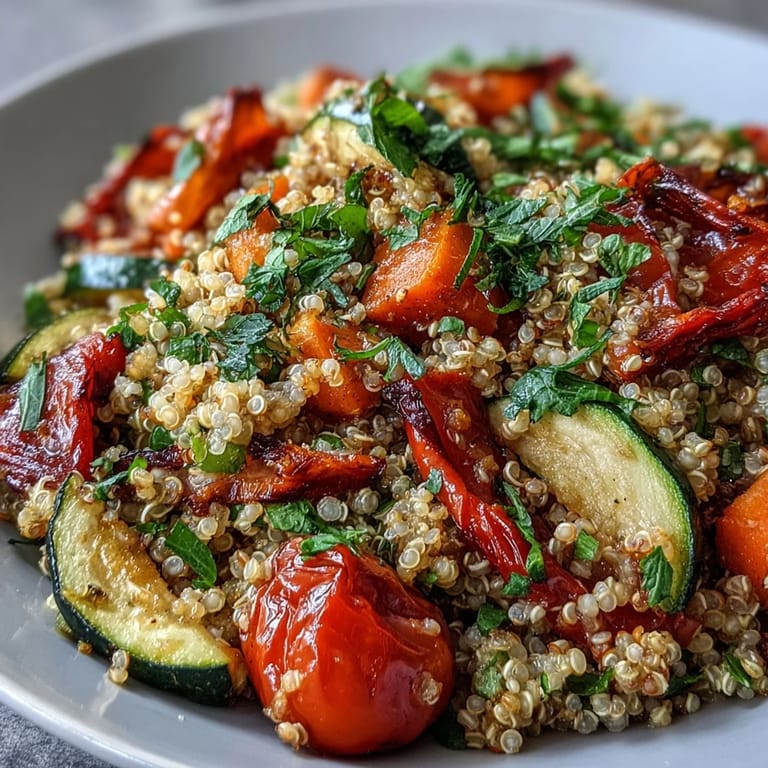
My neighbor stopped by one evening while I was making this, and the aroma of roasting vegetables mixed with cumin had her lingering by the kitchen counter asking questions. By the time I plated it up, she was already mentally planning to make it for her book club gathering next week, convinced it looked far more complicated than it actually is.
Ingredients
- Quinoa, rinsed: Rinsing removes the bitter coating that nobody talks about until you taste it, and it makes all the difference between fluffy and slightly grainy.
- Vegetable broth or water: Broth adds whispers of flavor, but water works beautifully too if that's what you have.
- Red bell pepper, diced: The sweetness intensifies when roasted, and the red color just makes the whole dish feel celebratory.
- Zucchini, diced: It releases moisture as it cooks, which actually helps everything steam together slightly—not a mistake, just chemistry.
- Carrot, peeled and diced: These become almost candy-like when caramelized in the oven.
- Red onion, diced: Don't skip this; it adds a gentle sharpness that balances the sweetness of the roasted vegetables.
- Cherry tomatoes, halved: They burst open and create tiny pockets of brightness throughout the pilaf.
- Olive oil: Use what you'd actually eat, because it carries all the flavor here.
- Garlic, minced: Thirty seconds in hot oil is all it takes to go from raw to aromatic—overshooting this is how burnt happens.
- Ground cumin: This is the spice that makes people ask what secret ingredient you used.
- Dried thyme: It brings an earthy note that ties everything together like a melody.
- Smoked paprika: Just a touch adds depth without smoke-signaling across the kitchen.
- Salt and black pepper: Taste as you go; the vegetables release salt as they cook.
- Fresh parsley: The green brightness at the end is non-negotiable.
- Fresh mint, optional: I add it when I'm feeling a little fancy or when spring is finally here.
- Lemon juice: This wakes everything up at the last second.
Tired of Takeout? 🥡
Get 10 meals you can make faster than delivery arrives. Seriously.
One email. No spam. Unsubscribe anytime.
Instructions
- Heat your oven:
- Set it to 425°F and give it time to actually reach temperature while you prep vegetables, because a properly hot oven is what makes the roasting happen.
- Prepare the vegetables:
- Chop everything into roughly bite-sized pieces—they should all be similar sizes so nothing gets ignored in a corner of the pan. Toss them with olive oil, salt, and pepper until everything glistens.
- Roast until golden:
- Spread them on a baking sheet in a single layer and let them sit in that hot oven for 20 to 25 minutes, stirring halfway through. You're looking for edges that turn golden and caramelized, with a slight char that whispers of depth.
- Start the quinoa:
- While vegetables roast, rinse your quinoa one more time under cold water, then combine it with broth in a saucepan. Bring it to a boil, then lower the heat, cover, and let it simmer gently for 15 minutes until the liquid disappears.
- Let it rest:
- Once the liquid is absorbed, leave the covered pot sitting undisturbed for 5 minutes—this is when the grains finish softening and become truly fluffy.
- Fluff and finish:
- Use a fork to gently separate the grains, breaking up any clumps without mashing them into submission.
- Toast the spices:
- In a large skillet over medium heat, warm a drizzle of fresh olive oil and add minced garlic, letting it become fragrant in about 30 seconds. Quickly add your cumin, thyme, and smoked paprika, stirring constantly so they bloom without burning.
- Combine everything:
- Add the fluffed quinoa and roasted vegetables to the skillet with the spiced oil, tossing gently to coat everything evenly and warm it through.
- Brighten with herbs and citrus:
- Remove from heat and stir in the parsley, mint if you're using it, and a squeeze of fresh lemon juice. Taste and adjust seasoning, because salt and pepper are your friends here.
- Serve:
- Eat it warm while it still steams, or let it cool and serve it at room temperature—both ways are equally delicious.
 Save
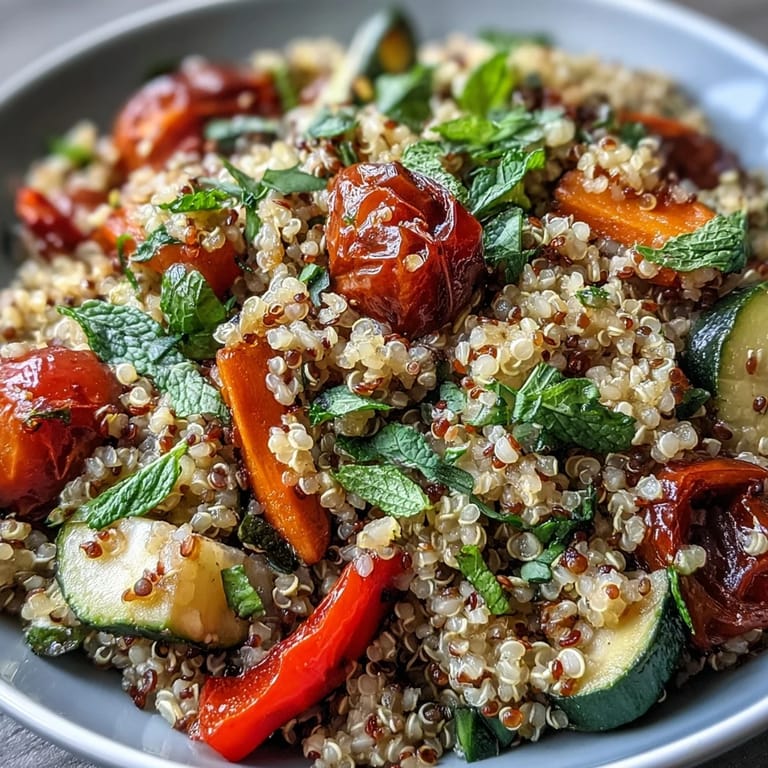
Save There's something almost meditative about watching vegetables transform in the oven, their colors deepening and their sweetness intensifying. I've made this dish dozens of times now, and it never fails to turn an ordinary evening into something that feels intentional and nourishing.
Seasonal Flexibility
The beauty of this pilaf is how it bends to whatever your farmers market or garden offers. Summer calls for yellow squash and fresh basil; fall begs for butternut squash and sage; spring invites asparagus and dill. I've learned to think of the base recipe as a framework rather than a rulebook, and some of my favorite versions came from improvising with whatever I had on hand.
Building Protein
While this pilaf is naturally vegetarian and quite filling on its own, it becomes a complete meal with minimal effort. A can of chickpeas stirred in at the end transforms it into something more substantial, or you can serve it alongside grilled fish or roasted chicken if that's your style. I've also crumbled some feta over individual bowls when dairy was welcome at the table, though the plain version is just as satisfying.
Make-Ahead and Storage
This dish is a gift to your future self because it tastes just as good—maybe even better—the next day when the flavors have settled and mingled. Pack it in containers for lunch, reheat gently with a splash of water if it seems dry, or eat it straight from the fridge if you prefer your leftovers cool.
- Store in an airtight container for up to four days, and it stays fresh enough for easy weekday meals.
- You can roast your vegetables up to a day ahead and just assemble everything when hunger strikes.
- Frozen herbs like parsley and mint thaw instantly when stirred in, so don't stress about fresh if you're caught without.
 Save
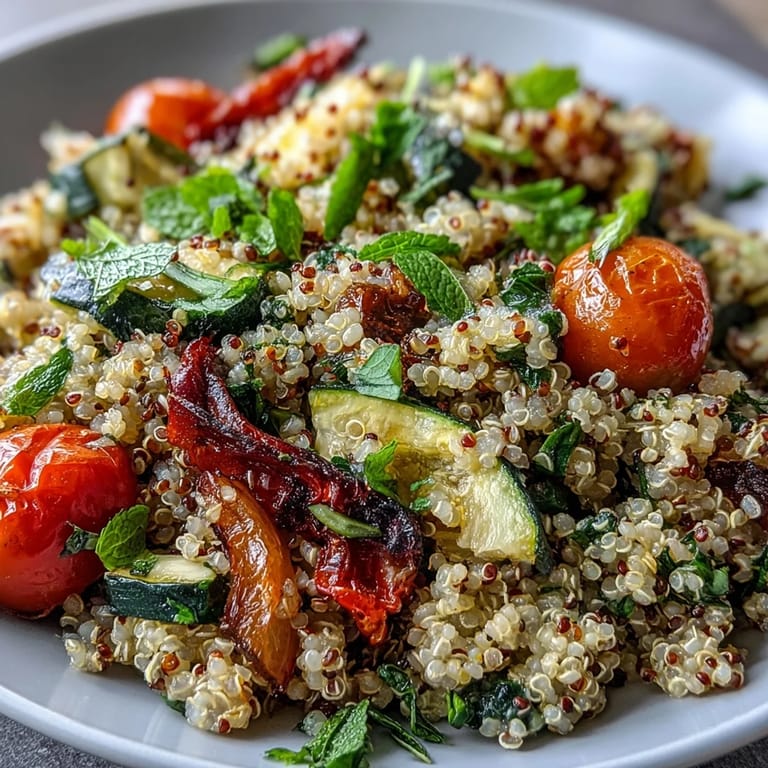
Save This pilaf has become my answer to the question of what's for dinner when I want something nourishing without complication. There's real joy in a bowl of food this colorful and honest.
Recipe FAQs
- → Can I use different vegetables?
Absolutely. Swap in any seasonal vegetables you enjoy such as squash, eggplant, broccoli, or green beans. The roasting method works well with most vegetables.
- → How do I store leftovers?
Store cooled pilaf in an airtight container in the refrigerator for up to 4 days. Reheat gently in the microwave or serve at room temperature.
- → Can I make this ahead?
Yes. Roast vegetables and cook quinoa up to 2 days in advance. Combine and reheat with fresh herbs and lemon juice just before serving.
- → Is this suitable for meal prep?
Perfect for meal prep. Portion into containers and refrigerate. The flavors actually improve after a day as the quinoa absorbs the aromatic seasonings.
- → How can I add more protein?
Stir in drained chickpeas, white beans, or crumbled feta cheese. For additional plant protein, serve alongside lentils or top with toasted nuts.
- → What broth works best?
Vegetable broth keeps this vegetarian and adds depth. Use low-sodium versions to control salt levels. Water works but yields milder flavor.