 Save
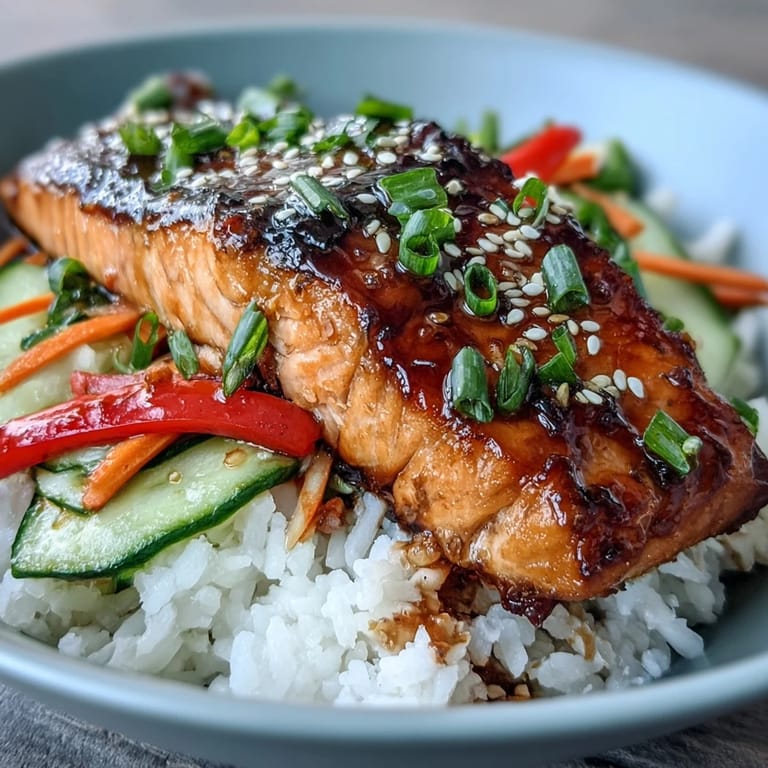
Save My neighbor showed up at my door one evening with a container of soy-ginger glazed salmon, still warm, and I understood immediately why she'd been raving about it all week. The glaze caught the light like lacquer, and when I tasted it, that perfect balance of savory, sweet, and spicy heat made everything click. Now I make this bowl whenever I want to feel like I've got my life together, even if it's just a Tuesday night and I'm eating alone at my kitchen counter.
I made this for my sister after she mentioned offhand that she wanted to eat healthier, and watching her scrape the bowl clean with her spoon was worth every minute of julienning. She asked for the recipe the next day, which felt like the highest compliment.
Ingredients
- Salmon fillets (150 g each): Choose fillets with skin on for crispier edges when baked, and let them come to room temperature for even cooking.
- Soy sauce: The backbone of your glaze, it carries all the umami depth that makes this bowl sing.
- Honey: Balances the salt and adds that caramelized sweetness when the salmon bakes.
- Fresh ginger: Grate it just before mixing the glaze so you get all the bright, peppery oils.
- Garlic: Mince it fine so it dissolves into the glaze rather than appearing as visible chunks.
- Rice vinegar: A splash of acidity that lifts the entire dish and keeps it from feeling heavy.
- Sesame oil: Use the toasted kind for nuttiness, but go light because a little goes a long way.
- Jasmine rice: Fragrant and forgiving, it's the perfect canvas for bold flavors.
- Carrot, cucumber, and bell pepper: Julienne them thin enough that they soften slightly from the warm rice below, but still keep their snap.
- Edamame: Buy them already shelled and cooked to save yourself twenty minutes of shelling.
- Toasted sesame seeds: Toast them yourself if you have time, the difference in flavor is noticeable.
- Scallions: The final flourish that adds a whisper of onion sharpness and color.
Tired of Takeout? 🥡
Get 10 meals you can make faster than delivery arrives. Seriously.
One email. No spam. Unsubscribe anytime.
Instructions
- Prepare the rice foundation:
- Rinse your rice under cold running water, stirring gently with your fingers until the water runs almost clear. This removes excess starch so your rice grains stay separate and fluffy instead of becoming gluey.
- Start the rice cooking:
- Combine rice and water in a saucepan, bring to a rolling boil, then reduce heat to low and cover tightly. Simmer for exactly 15 minutes without lifting the lid, then remove from heat and let it steam, covered, for 10 minutes more.
- Mix the glaze magic:
- Whisk together soy sauce, honey, grated ginger, minced garlic, rice vinegar, and sesame oil in a small bowl. Taste it straight from your spoon and adjust to your preference, though the glaze will deepen once it hits the hot salmon.
- Thicken if you like:
- If you want a glossier glaze that clings to the salmon, dissolve cornstarch in 1 tablespoon of water and whisk it into your mixture. This step is optional but gives you that restaurant-quality finish.
- Prep your oven and pan:
- Preheat the oven to 200°C (400°F) and line a baking sheet with parchment paper. This prevents sticking and makes cleanup feel less like punishment.
- Glaze and bake the salmon:
- Place salmon fillets skin-side down on the prepared sheet and brush each one generously with the glaze, reserving about a quarter of it for finishing. Bake for 12 to 14 minutes until the salmon is cooked through and flakes easily when you press it with a fork.
- Reduce the remaining glaze:
- While the salmon bakes, pour your reserved glaze into a small saucepan and bring it to a simmer over medium heat. If you used cornstarch, it will thicken in about 1 to 2 minutes; if not, just let it warm through and concentrate slightly.
- Slice and julienne your vegetables:
- While everything else is cooking, use a sharp knife or mandoline to julienne your carrots, cucumber, and bell pepper into thin, matchstick-sized pieces. This is meditative work and keeps your hands busy while you wait.
- Assemble your bowls:
- Divide the fluffy rice among 4 bowls, creating a small nest in the center where your salmon will sit. Arrange the raw vegetables and edamame in little clusters around the salmon so each spoonful has color and texture.
- Finish with style:
- Drizzle the warm glaze over everything, then sprinkle with toasted sesame seeds and fresh scallion slices. Serve with lime wedges on the side so people can squeeze them over at their own pace.
 Save
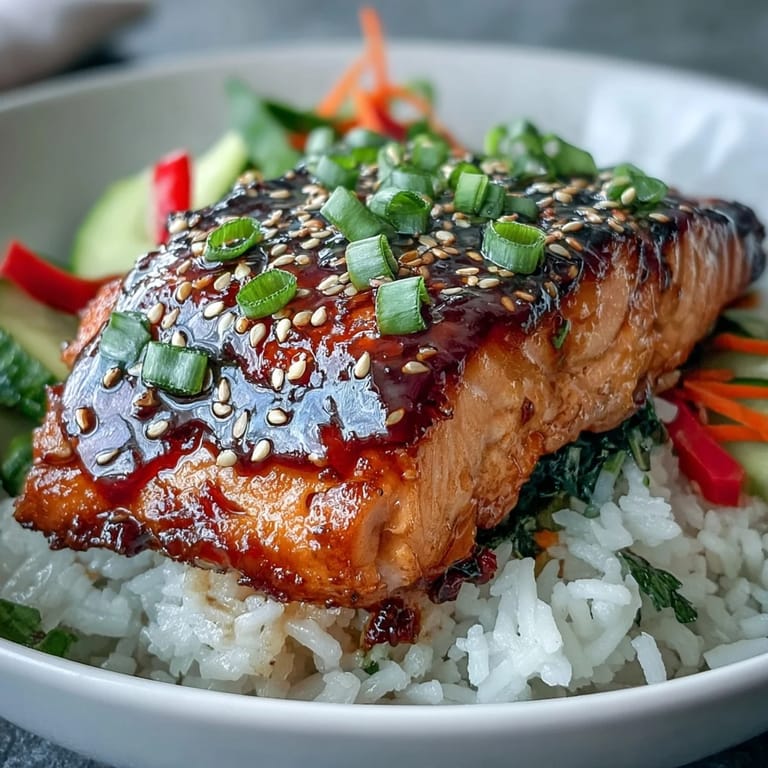
Save There's something about this bowl that makes people slow down and actually taste their food instead of just eating to be full. I watched my friend's eyes close on the first spoonful, and in that moment I understood why cooking for people matters.
The Secret to Glossy Salmon
The difference between a flat glaze and one that shines like it belongs in a magazine is all about what happens after the salmon leaves the oven. If you brush on the glaze only once and leave it, it absorbs into the fish and disappears. But if you simmer that reserved portion in a pan, it thickens slightly and becomes more concentrated, clinging to the salmon instead of running off.
Why Jasmine Rice Matters Here
I used to think all white rice was interchangeable until I switched from long-grain to jasmine and suddenly everything tasted more intentional. Jasmine rice has a subtle floral note that complements the ginger and sesame without fighting for attention, and it stays tender without becoming mushy. The aromatics in jasmine rice echo the flavors in your glaze in a way that feels quietly smart.
Building Flavor Through Layers
This bowl is actually three different flavor experiences stacked on top of each other, and that's what keeps it interesting. The rice is neutral and warm, the vegetables add fresh crispness and slight sweetness, and the salmon with its glaze brings all the savory, umami punch. When you eat it, you're tasting contrast in every spoonful, which is what tricks your brain into thinking something simple is actually sophisticated.
- Don't skip the lime wedges, even if you don't think you'll use them, because they open up the whole dish at the last second.
- Julienne the vegetables the same day you plan to eat this, as they'll start to weep and soften if left overnight.
- If you're cooking for one, the glaze keeps for a week in the fridge and works beautifully on chicken or roasted tofu too.
 Save
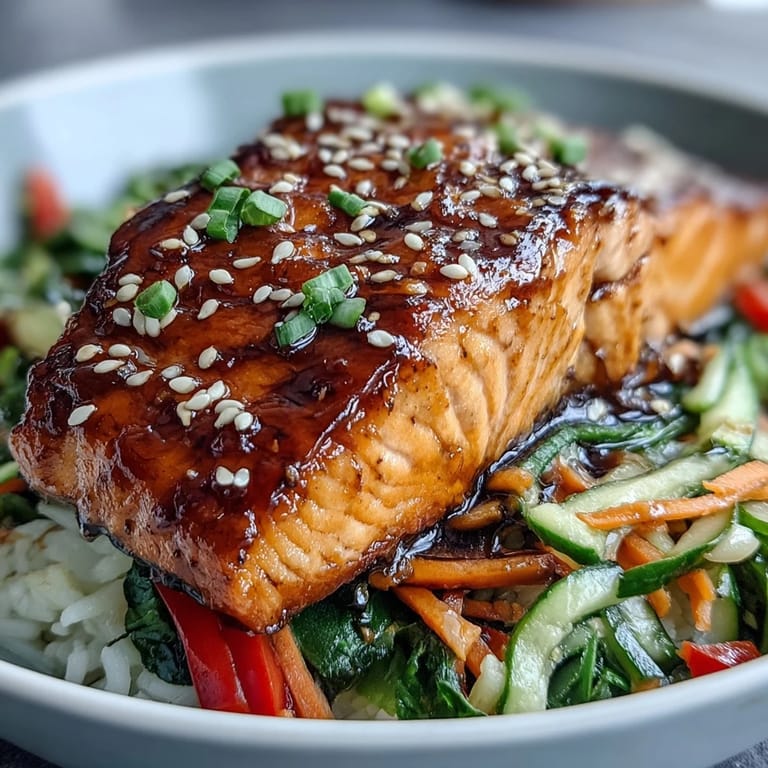
Save This bowl has become my answer when someone asks what I'm making for dinner and I want it to feel special without spending hours in the kitchen. It's proof that simple ingredients and a little care can taste like something you'd order and pay too much for.
Recipe FAQs
- → How do I know when the salmon is done?
The salmon is cooked through when it flakes easily with a fork and the internal temperature reaches 145°F (63°C). The flesh should appear opaque throughout.
- → Can I use frozen salmon fillets?
Yes, thaw frozen salmon in the refrigerator overnight before cooking. Pat them dry thoroughly before applying the glaze for better adhesion and browning.
- → What vegetables work best in this bowl?
Julienned carrots, cucumber, and red bell pepper provide excellent crunch and color. You can also add shredded cabbage, snap peas, or steamed broccoli depending on preference.
- → Is this bowl gluten-free?
Traditional soy sauce contains gluten. To make this bowl gluten-free, substitute regular soy sauce with tamari or a certified gluten-free soy sauce alternative.
- → How long does this keep for meal prep?
Store components separately in airtight containers. The salmon and rice will keep for 3-4 days in the refrigerator. Add fresh vegetables just before serving for best texture.
- → Can I grill the salmon instead of baking?
Absolutely. Grill the salmon over medium-high heat for 4-5 minutes per side, brushing with the glaze during the last few minutes of cooking for excellent charred flavor.