 Save
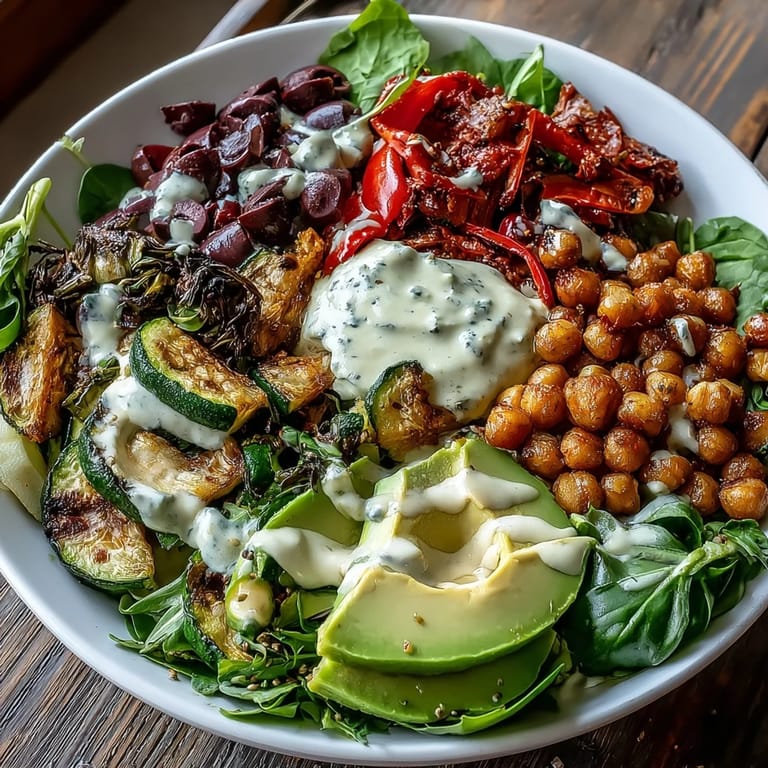
Save My kitchen felt suddenly quiet that Tuesday afternoon when I realized I'd been eating the same sad desk lunch for weeks. Something shifted when I started layering roasted vegetables into a bowl with chickpeas and that creamy tahini dressing—suddenly lunch became this vibrant, almost meditative ritual. The colors alone felt like a small rebellion against monotony, and by the time I drizzled that golden tahini across the top, I understood why people get excited about food again. This bowl doesn't demand much from you, but it gives back everything in nourishment and genuine flavor.
I made this for my sister when she first went vegan, and I remember the exact moment she took her first bite—her shoulders actually relaxed. She'd been worried about being difficult at family dinners, about missing out, and here was proof that plant-based eating could be this generous and abundant. We sat on the kitchen counter passing the bowl back and forth, talking about everything we'd both been avoiding, and something about sharing food that felt this good made the conversation easier. That's when I realized this bowl was doing more than filling stomachs.
Ingredients
- Mixed salad greens: Arugula, spinach, or romaine—whatever feels fresh and crisp in your hands when you hold it, because that's how you know it's ready to be the foundation of something good.
- Zucchini: Dice these into roughly half-inch pieces so they caramelize at the edges rather than turn mushy; the slight char is where the real flavor lives.
- Red bell pepper: Choose one that feels heavy for its size and has that glossy skin, because that's the sign it's packed with juice and sweetness.
- Red onion: The natural sugars concentrate as it roasts, turning your onion into something almost honeyed and nothing like its raw, sharp self.
- Eggplant: Cut into small cubes and don't skip the salt on the roasting sheet—it helps them release moisture so they get creamy inside instead of soggy.
- Chickpeas: If using canned, rinse them thoroughly under cold water until the liquid runs clear, which removes that metallic taste that nobody actually enjoys.
- Tahini: Buy the kind that's just ground sesame seeds with nothing else; the creamy texture means it's been ground longer and will taste deeper and richer.
- Lemon juice: Fresh squeezed makes every molecule of this dressing sing, but if you're in a rush, bottled works too—just taste as you go.
- Kalamata olives: These briny, meaty olives are worth seeking out; they taste like the Mediterranean coast in a way cheaper olives just don't capture.
- Avocado: Wait until the last possible moment to slice it so it stays that buttery green instead of turning that sad grayish color.
- Hummus: Homemade is a joy when you have time, but store-bought is honest work and this bowl is still beautiful either way.
- Olive oil: Use the good stuff for roasting because heat actually does bring out the deeper flavors in quality olive oil, not destroy them like some say.
- Dried oregano: Crush it slightly between your palms before tossing with the vegetables to wake up the oils and make it taste fresher.
Tired of Takeout? 🥡
Get 10 meals you can make faster than delivery arrives. Seriously.
One email. No spam. Unsubscribe anytime.
Instructions
- Heat your oven and prep your vegetables:
- Set the oven to 425°F and while it's warming, get your cutting board ready and chop everything into roughly the same size pieces so they roast evenly together. This is the part that takes the longest, but once it's done, everything else moves quickly.
- Season and spread on the sheet:
- Toss your chopped vegetables with olive oil, oregano, smoked paprika, salt, and pepper until everything glistens with that golden coating. Spread them out in a single layer on your baking sheet so they have room to breathe and actually caramelize instead of steam.
- Roast until the edges char:
- Get them into the oven for 25 to 30 minutes, stirring about halfway through so the sides that were touching the hot pan get their turn in the heat. You'll know they're done when the edges are slightly darkened and everything feels tender when you poke it with a fork.
- Make the dressing while vegetables roast:
- In a small bowl, whisk together tahini, fresh lemon juice, water, minced garlic, and ground cumin until it becomes smooth and pourable. If it's too thick, add water one tablespoon at a time until it reaches that creamy, drizzle-able consistency.
- Assemble your bowls:
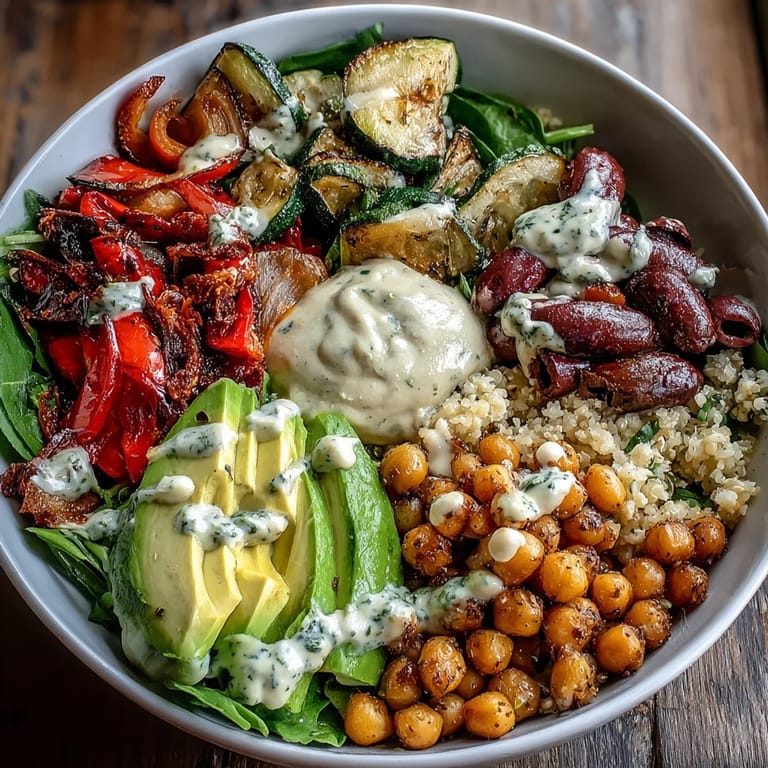
- Divide the mixed greens among four bowls and start layering—chickpeas next, then the warm roasted vegetables while they still have that heat in them. Add your avocado slices, those beautiful olives, and a generous spoonful of hummus to each bowl.
- Finish with the golden touch:
- Just before eating, drizzle the tahini dressing over everything, letting it find its way into the cracks and crevices. The dressing will seem to magically tie all these different flavors and textures into one coherent, delicious thing.
 Save
Save There's this moment when everything in the bowl is still at different temperatures—the warm vegetables releasing their aroma, the cool greens keeping it all bright, the creamy avocado acting as this gentle buffer between the salty olives and that citrus dressing—where you realize this is why people cook. It's not just about being vegan or gluten-free or checking boxes; it's about the fact that something this simple can feel this nourishing and complete.
Why Roasting Transforms These Vegetables
Raw vegetables have this crisp honesty to them, but roasted vegetables are a different creature entirely. The heat concentrates their natural sugars and creates these caramelized edges that taste almost sweet, like the vegetable has revealed a secret version of itself that was always there but needed fire to bring it out. The zucchini stops being watery and becomes nutty, the pepper transforms into something almost fruity, and even the red onion gets this honeyed depth that makes you understand why people spend entire culinary careers studying heat and time.
The Tahini Dressing is Actually Magic
I used to think tahini was just for hummus, but this simple dressing changed my whole understanding of what you can do with ground sesame seeds. It's creamy like a traditional dressing but feels lighter, with that subtle nuttiness that makes everything it touches taste more intentional and complex. The lemon juice and garlic cut through that richness so it never feels heavy, and the cumin adds this warm spice note that somehow makes the entire bowl taste more like itself.
Building Layers and Letting Them Matter
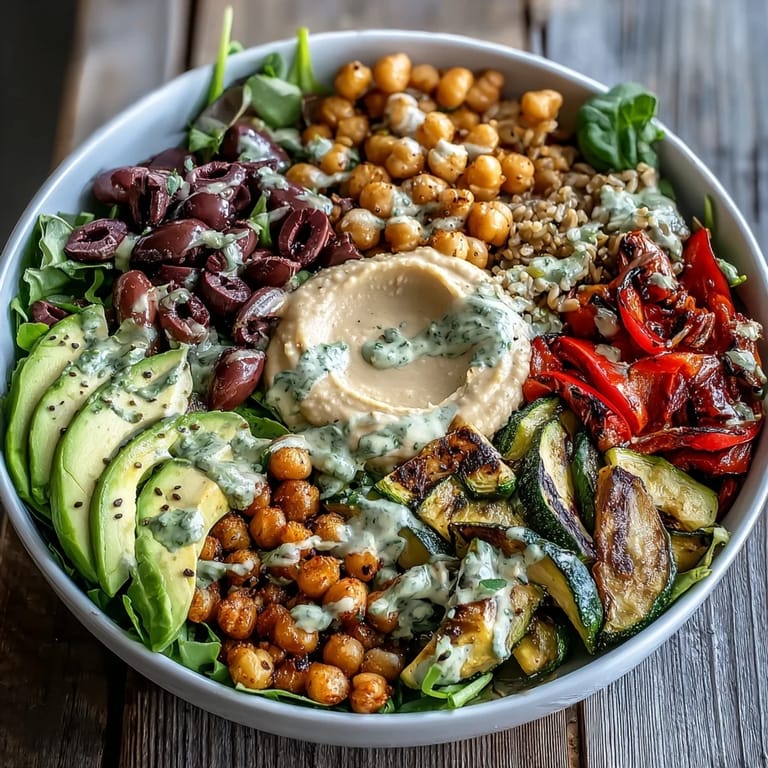
There's actually strategy in how you layer this bowl, even though it might seem random. Starting with greens as your foundation gives you something crisp and cool to anchor everything else, the warm roasted vegetables add comfort and substance, and then the creamy elements—avocado, hummus, tahini dressing—tie it all together into something that tastes unified despite being made of distinct, beautiful parts. Think of it like building a friendship—you need different personalities and textures to make something that actually holds together and makes people want to come back.
- The greens should make up about a third of your bowl, giving you enough base without making it feel like salad.
- Don't be shy with the hummus and tahini—these creamy elements are what make the whole thing feel intentional and satisfying.
- Taste as you build and adjust the seasoning of your dressing if your particular vegetables needed it; every kitchen is different.
 Save
Save This bowl is what happens when you stop thinking of plant-based cooking as subtraction and start thinking of it as addition—adding colors, textures, flavors, and intention. Once you make it once, you'll understand why it became the thing I make when I want to feel good and feed the people I love.
Recipe FAQs
- → What vegetables work best in this bowl?
Zucchini, bell peppers, eggplant, and red onion roast beautifully together, developing sweet, caramelized flavors that complement the fresh greens and creamy toppings perfectly.
- → Can I prepare this bowl ahead of time?
Yes! Roast vegetables in advance and store separately. Keep dressing in a sealed container and assemble bowls when ready to eat, adding avocado fresh to prevent browning.
- → How do I make the tahini dressing smoother?
Whisk tahini with warm water first, then add lemon juice gradually. The warmth helps emulsify the mixture, creating a creamy, pourable consistency.
- → What proteins can substitute chickpeas?
White beans, lentils, or cubed tofu work wonderfully. For added heartiness, consider adding cooked quinoa or brown rice as a base layer.
- → Is this bowl gluten-free?
Naturally gluten-free when using certified gluten-free hummus and tahini. Always check packaged ingredient labels if you have severe gluten sensitivity.
- → How long does the dressing keep?
Stored in an airtight container in the refrigerator, the tahini dressing stays fresh for up to one week. Shake or whisk before using as it may thicken when cold.