 Save
Save One afternoon, I was standing in my kitchen staring at a half-empty fridge when my neighbor knocked on the door with a bag of just-picked vegetables from her garden. That moment changed how I think about bowls—no fancy technique required, just good ingredients arranged together with intention. This Mediterranean Buddha Bowl became my answer to those days when you want something that feels like a celebration but comes together in under an hour.
I made this for a dinner party once where someone mentioned they were newly vegetarian and honestly nervous about it. Watching them go back for seconds, asking about the hummus and feta combo, made me realize how satisfying real food can be without any complicated substitutions. That bowl did more talking than I ever could.
Ingredients
- Quinoa, 1 cup rinsed: This grain is the quiet backbone of the bowl—it stays fluffy, never mushy, and actually absorbs the flavors around it.
- Water, 2 cups: Use filtered if you can; it makes a subtle but real difference in how clean the quinoa tastes.
- Zucchini, 1 medium chopped: Cut it into roughly the same size as your other vegetables so everything roasts evenly and gets those little caramelized edges.
- Red bell pepper, 1 chopped: The sweetness balances the earthiness of everything else, and it actually gets sweeter as it roasts.
- Red onion, 1 small sliced: Don't skip this—the sharpness mellows beautifully in the oven and adds texture.
- Cherry tomatoes, 1 cup halved: They burst slightly during roasting and concentrate their flavor, almost like tiny jam pockets in your bowl.
- Olive oil, 2 tablespoons: Use something you actually like drinking, not the sad bottle hiding in the back of your cabinet.
- Dried oregano, 1/2 teaspoon: This is the spice that whispers Mediterranean through the whole bowl.
- Ground cumin, 1/2 teaspoon: Just enough warmth to make you wonder what you're tasting.
- Salt and black pepper, to taste: Season as you go, not just at the end.
- Chickpeas, 1 can (15 oz) drained and rinsed: Canned is perfectly fine here—just rinse them well to remove that cloudy liquid.
- Kalamata olives, 1/2 cup pitted and halved: These are salty little flavor bombs that make every bite interesting.
- Hummus, 1/2 cup: Creamy dollops create pockets of richness that bind the bowl together.
- Greek yogurt, 1/2 cup: The tang here is essential; it cuts through everything else and keeps the bowl from feeling heavy.
- Feta cheese, 1/2 cup crumbled: Buy it in blocks and crumble it yourself if you can—pre-crumbled tends to be dry.
- Fresh parsley, 1/4 cup chopped: This isn't garnish; it's a flavor component that adds brightness at the very end.
- Lemon wedges, for serving: These are your bowl's best friend, waking everything up with acidity.
Tired of Takeout? 🥡
Get 10 meals you can make faster than delivery arrives. Seriously.
One email. No spam. Unsubscribe anytime.
Instructions
- Heat your oven and prep your vegetables:
- Turn the oven to 425°F and while it's preheating, chop all your vegetables so they're roughly the same size. This matters more than you think.
- Build the roasting pan:
- Toss your zucchini, bell pepper, onion, and tomatoes with olive oil, then sprinkle the oregano, cumin, salt, and pepper over top. Toss again to coat everything evenly, then spread in a single layer on your baking sheet.
- Roast until golden:
- Put it in the oven and set a timer for 12 minutes, then give everything a stir so it roasts evenly. You want the vegetables tender with little caramelized edges, which takes about 20–25 minutes total.
- Start your quinoa:
- While the vegetables are roasting, rinse your quinoa in a fine-mesh strainer (this removes the natural bitterness), then combine it with water in a saucepan. Bring to a boil, then immediately reduce the heat to low, cover, and let it simmer quietly for 15 minutes.
- Let quinoa rest:
- Turn off the heat but don't lift that lid for 5 minutes—this steaming time is when the magic happens and each grain becomes fluffy and separate.
- Warm the chickpeas:
- In a small skillet, heat your drained chickpeas over medium heat with just a tiny pinch of salt. They only need 2–3 minutes, just long enough to warm through and smell nutty.
- Fluff and assemble:
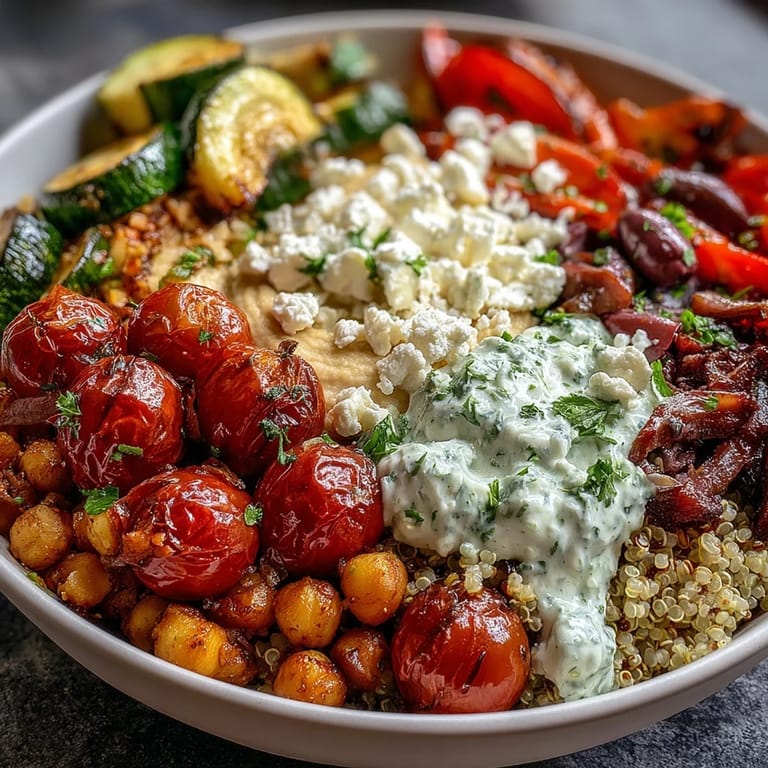
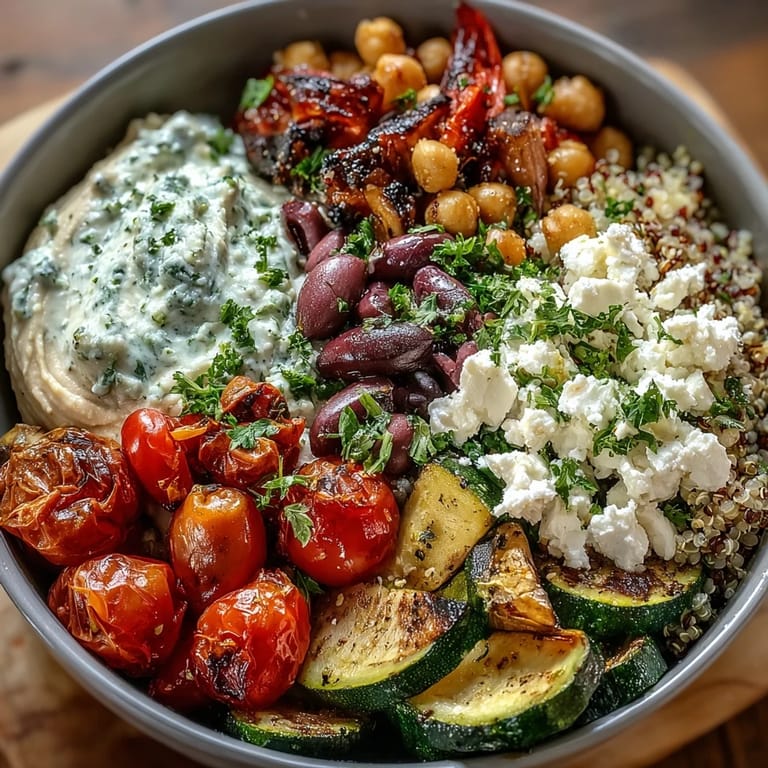
- Use a fork to gently fluff your quinoa, then divide it among four bowls. Arrange the roasted vegetables, warm chickpeas, olives, a dollop of hummus, a dollop of Greek yogurt, and a handful of crumbled feta on top of each bowl.
- Finish with brightness:
- Scatter fresh parsley over everything and serve with lemon wedges on the side so people can squeeze them to taste.
 Save
Save There's something about building a bowl that feels ceremonial, like you're creating something meant specifically for whoever's about to eat it. That intentionality—choosing where each element goes, layering textures and flavors—transforms it from lunch into something that actually nourishes.
The Roasting Secret
The vegetables are what make this bowl sing, and the roasting is what makes the vegetables sing. When you roast them at high heat, their natural sugars concentrate and caramelize, giving you complexity that raw vegetables can never achieve. I learned this the hard way after years of assembly-line chopping, until someone told me to actually pay attention to how vegetables transform in an oven.
Building Your Bowl Like You Mean It
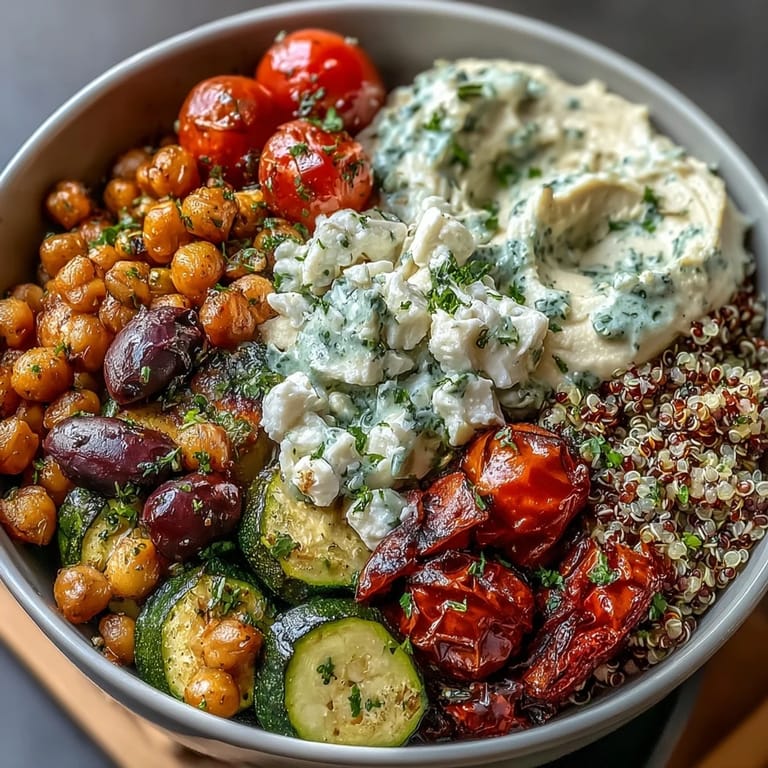
The order matters more than you'd think. Start with quinoa as your base because it's neutral and absorbs flavors from everything layered on top. Then arrange your roasted vegetables in clusters so you get a mix of everything in each bite, rather than ending up with all the zucchini in one corner. The hummus and yogurt act like a sauce, so place them strategically so they can bind the components together.
Making It Your Own
This bowl is less a strict recipe and more a template for whatever you have on hand. I've made it with roasted sweet potato instead of zucchini, added crispy chickpeas instead of warming them, even swapped in labneh when Greek yogurt seemed boring. The Mediterranean flavors are forgiving, and they play well with almost any vegetable you want to throw at them. The key is respecting each ingredient and not overcrowding your pan.
- Roast vegetables in a single layer so they caramelize instead of steam.
- Make extra roasted vegetables because they're delicious cold for next-day lunches.
- Assemble bowls right before eating so the quinoa doesn't absorb all the liquid and turn mushy.
 Save
Save This bowl has become my answer to so many different moments—quick weeknight dinners, impressive lunch-for-one moments, and surprisingly, the thing I bring to potlucks when I'm not sure what anyone eats. It's wholesome without being serious, colorful without being fussy, and genuinely better when you slow down and actually taste it.
Recipe FAQs
- → Can I make this bowl vegan?
Yes, simply omit the feta cheese and use plant-based yogurt instead of Greek yogurt. The hummus provides plenty of creamy texture on its own, and you can add avocado for extra richness if desired.
- → How long do leftovers keep?
Store components separately in airtight containers in the refrigerator for up to 4 days. Keep the quinoa, roasted vegetables, and toppings in separate containers to maintain freshness. Reheat vegetables and quinoa gently before assembling.
- → Can I use different grains?
Absolutely. Farro, brown rice, or even bulgur work beautifully as substitutes for quinoa. Adjust cooking time according to package directions—most grains will take between 15-45 minutes to cook.
- → What vegetables work best for roasting?
The combination of zucchini, bell peppers, onions, and cherry tomatoes provides great variety. You can also add eggplant, red potatoes, or carrots. Just ensure all vegetables are cut into similar-sized pieces for even cooking.
- → Is this suitable for meal prep?
This bowl is excellent for meal prep. Prepare all components in advance and store them separately. The roasted vegetables often taste even better after a day as flavors meld. Assemble bowls fresh just before eating for the best texture.
- → Can I add protein?
While chickpeas provide protein, you can add grilled chicken, shrimp, or even sliced steak if you eat meat. For vegetarian options, consider adding grilled tofu or a hard-boiled egg for extra protein.