 Save
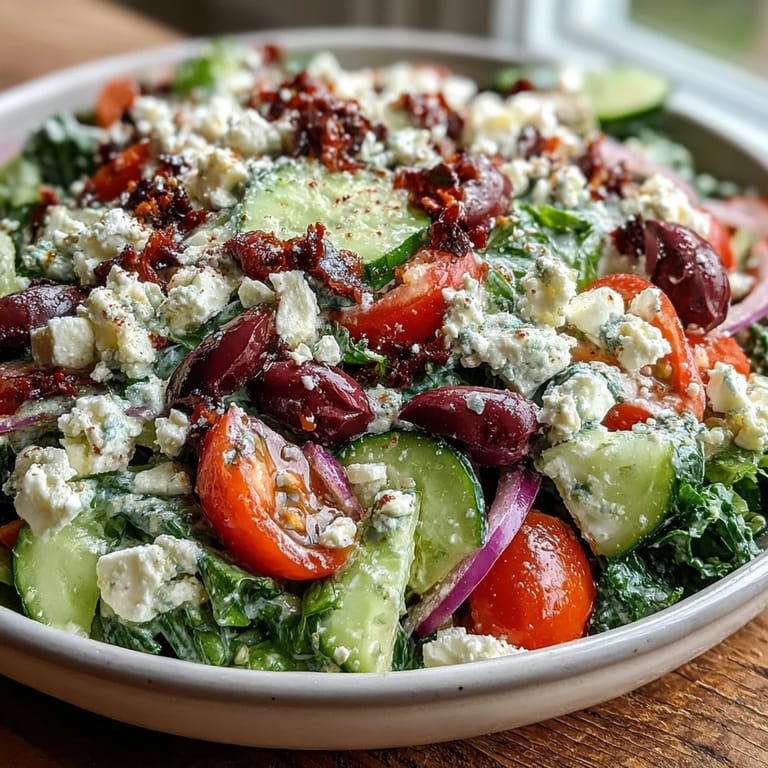
Save My neighbor Maria handed me a bowl of this salad one summer afternoon, the kind where the kitchen was too hot to turn on the oven. The lettuce was so crisp it practically snapped between my teeth, and those briny olives hit differently when you weren't expecting them. I spent the next week trying to recreate what she'd done, adjusting the vinegar, the garlic, the ratio of feta until my version finally felt right. Now it's what I reach for when I want something that tastes like the Mediterranean but takes less time than a phone call.
I made this for a picnic once where I forgot the main course entirely, but nobody minded because they were too busy demolishing salad bowls. My friend Mark ate three servings straight from the shared bowl with his hands like it was popcorn, and I realized then that simple food made with care beats fancy every time.
Ingredients
- Romaine lettuce: The sturdy base that doesn't wilt under vinaigrette like softer lettuces do; buy it whole and chop it yourself if you can, it stays fresher longer.
- Cherry tomatoes: Smaller than regular tomatoes so they halve easily and distribute flavor throughout the bowl instead of sitting in clumps.
- Cucumber: Slice it thin so it absorbs the dressing without turning soggy, and consider seeding it if your cucumbers run particularly watery.
- Red onion: The sharp bite mellows slightly once dressed, but slice it thin so it doesn't overpower the other vegetables.
- Feta cheese: Crumble it by hand into uneven pieces; they catch the dressing better than uniform crumbles and add visual interest.
- Kalamata olives: Pit them yourself if you find unpitted ones, the ritual is meditative and the flavor tastes fresher somehow.
- Extra-virgin olive oil: Don't skimp here, this is where the Mediterranean flavor actually lives in the vinaigrette.
- Red wine vinegar: It's the backbone of the dressing, tangy but not sharp, balancing the richness of the oil and cheese.
- Dried oregano: Toast it gently in your palm before adding to release its oils, or crumble it between your fingers as you go.
- Garlic: Mince it fine so it dissolves into the vinaigrette rather than leaving little sharp pieces behind.
- Dijon mustard: A small amount acts as an emulsifier, helping the oil and vinegar actually stay together instead of separating.
Tired of Takeout? 🥡
Get 10 meals you can make faster than delivery arrives. Seriously.
One email. No spam. Unsubscribe anytime.
Instructions
- Prep your vegetables:
- Chop the romaine into bite-sized pieces and halve your tomatoes so they're roughly the same size, then slice cucumbers and onion thin. This takes maybe five minutes and sets you up for success.
- Assemble the base:
- Toss the lettuce, tomatoes, cucumber, and onion together in your largest bowl, making sure everything is evenly distributed. The greens should look like they're ready for a crowd.
- Add the cheese and olives:
- Sprinkle feta crumbles and olive halves across the top, scattering them so you get some in every bite. Don't mix them in yet; let them sit visibly on top.
- Make the vinaigrette:
- In a small bowl or jar, whisk together olive oil, red wine vinegar, oregano, minced garlic, Dijon mustard, salt, and pepper until the mixture turns slightly cloudy and thick. This emulsification is what makes the dressing cling to the vegetables instead of pooling at the bottom.
- Dress and serve:
- Drizzle the vinaigrette over the salad just before eating and toss gently until everything glistens. Serve it immediately while the lettuce is still crisp and cold.
 Save
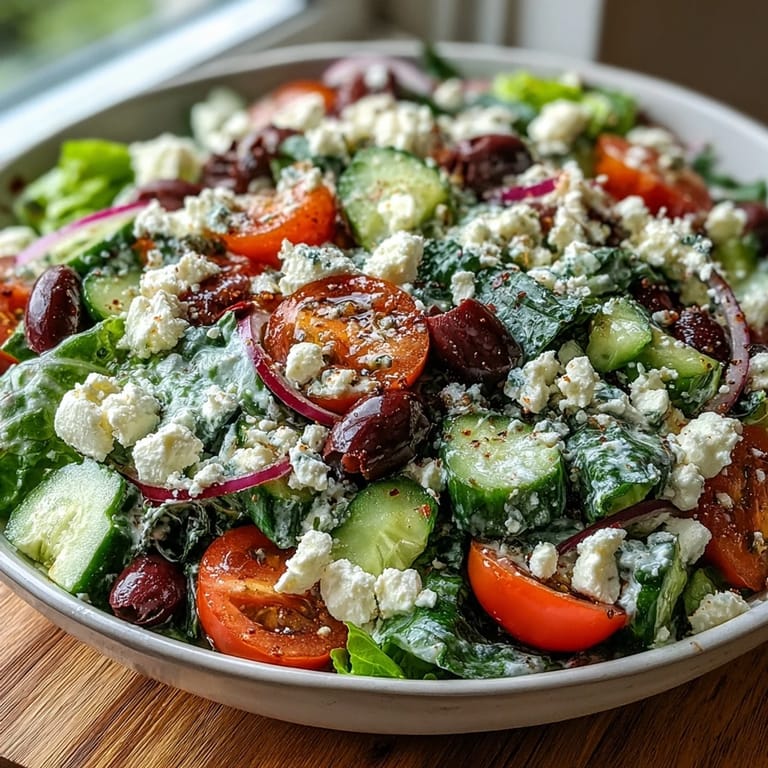
Save My daughter once asked why restaurant salads taste better, and I realized it was because they dress them to order. I started doing that at home, keeping the components separate until the last moment, and suddenly our salads tasted like they belonged on a menu.
Building Better Salads
The secret to a salad that doesn't disappoint is understanding that wet and dry need to stay mostly separate until the very last moment. Keep your lettuce in one container and your wet ingredients—tomatoes, olives, everything that will weep—in another. Even the vinaigrette can sit in a jar in the fridge for days, so you can dress individual bowls to order rather than hoping one big batch stays fresh.
Variations That Keep Things Interesting
This salad is a template, not a prison. In spring I add fresh dill and thinly sliced radishes for crunch; in late summer when bell peppers are sweet, I slice those in too. Some nights I roast chickpeas with a bit of oregano and scatter those across the top for protein that makes it a meal rather than a side, and nobody ever complains about that decision.
Serving and Storage Tips
Serve this salad in a large shallow bowl so everyone can reach the feta and olives without it looking picked over. If you're making it ahead for a gathering, keep the components prepped but separate, then assemble and dress everything about ten minutes before people arrive.
- The salad components keep separately in the fridge for up to two days, but feta and olives are best used within a day of opening.
- The vinaigrette keeps in a sealed jar in the fridge for a full week, so you can make extra and use it on other salads or roasted vegetables.
- If you're cooking for one person, make the full batch and eat leftovers for lunch the next day, dressing only what you'll eat immediately.
 Save
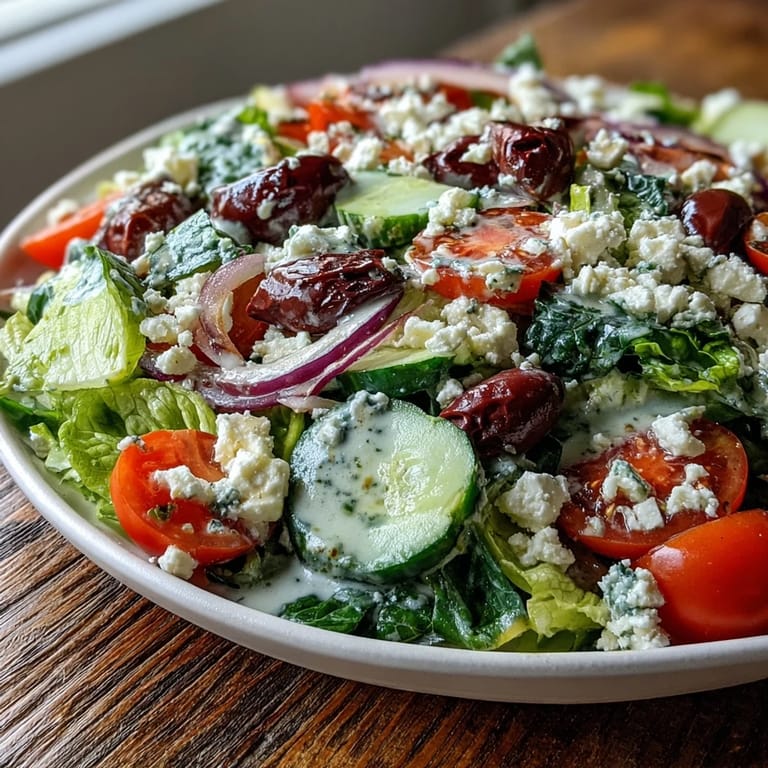
Save This salad lives in that beautiful space where simple feels elegant and quick feels intentional. Make it when you need something that tastes like care but doesn't demand hours in the kitchen.
Recipe FAQs
- → Can I make Greek salad ahead of time?
You can prep vegetables and dressing separately up to 24 hours in advance. Store chopped vegetables in an airtight container and keep vinaigrette in a sealed jar. Toss everything together just before serving to maintain crisp texture and prevent sogginess.
- → What cheese works best as a feta substitute?
Traditional Greek feta offers the best tangy, salty profile. For alternatives, try goat cheese for similar creaminess or halloumi for a firmer texture. Vegan feta works well for dairy-free needs. Avoid mild cheeses like mozzarella as they lack the necessary briny flavor.
- → How do I properly slice vegetables for Greek salad?
Chop romaine into bite-sized pieces for easy eating. Halve cherry tomatoes to release their juices. Slice cucumbers into uniform rounds or half-moons. Thinly slice red onion against the grain for milder flavor. Consistent sizing ensures even distribution of dressing.
- → What makes an authentic Greek vinaigrette?
Classic Greek dressing relies on extra-virgin olive oil as the base, red wine vinegar for acidity, dried oregano for earthiness, and fresh garlic for depth. A touch of Dijon mustard helps emulsify the mixture. The balance should be tangy with rich, fruity notes from quality olive oil.
- → How can I add protein to make this more filling?
Grilled chicken breast or thighs complement the Mediterranean flavors beautifully. Shrimp, chickpeas, or lentils work well too. For vegetarian protein, consider adding quinoa or serving with a side of hummus and pita. The salad itself provides 6g of protein per serving from the feta.
- → Why use Kalamata olives specifically?
Kalamata olives from Greece offer a distinct dark purple color and rich, fruity flavor with moderate saltiness. Their meaty texture holds up well in salads. If unavailable, other brine-cured Greek olives work, but avoid canned black olives which lack the complex flavor profile.