 Save
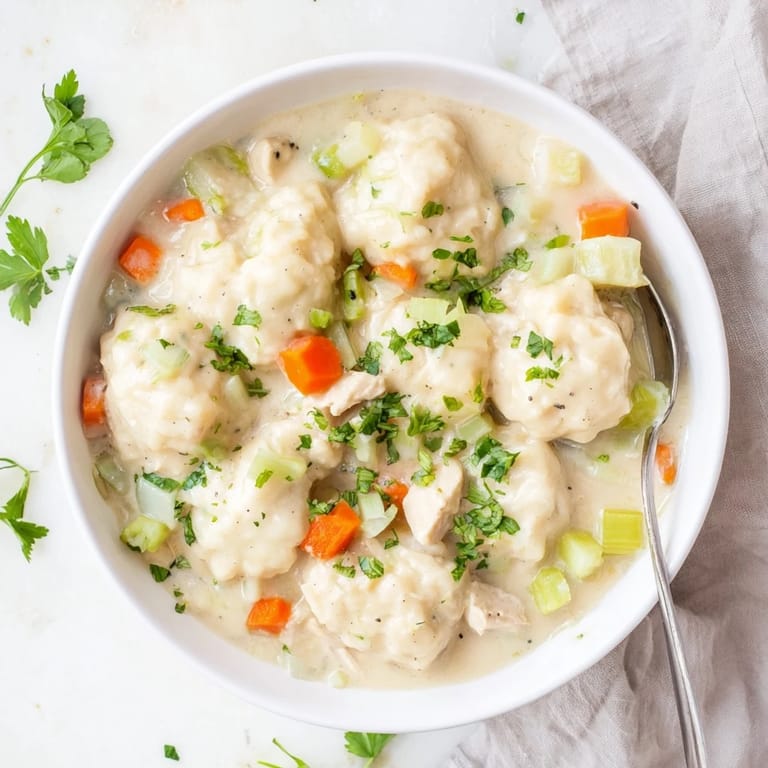
Save The first time I made chicken and dumplings, it was a snowed-in Sunday with nothing in the fridge but random vegetables and some chicken thighs I had forgotten about. My grandmother used to make something similar, though her version was more about whatever was on hand than following any real recipe. That day, watching those fluffy dough pillows rise through the steam bubbling up through the pot, I understood why this dish has survived generations of home cooks. Something magical happens when you drop simple dough into a simmering stew, the kitchen filling with that impossibly comforting aroma that makes everything feel like it will be okay.
Last winter, my sister came over after a terrible week at work, and I had this stew bubbling away on the back burner. She took one bite and actually got quiet, which for her is saying something, then asked for seconds before even finishing the first bowl. We sat at the kitchen table for hours while the snow fell outside, just eating and talking, and I realized that some recipes are not really about the food at all. The way the cream thickens the broth into something velvety and rich, how the peas pop with sweetness against the savory chicken, those are just details that bring people together and keep them there.
Ingredients
- Boneless chicken thighs: These stay tender and juicy even after long simmering, plus they have more flavor than breasts
- Unsalted butter and olive oil: The combination gives you richness from the butter and a higher smoke point from the oil for better browning
- Onion, carrots, and celery: This classic trio forms the flavor foundation, so take your time sauteing them until they are soft and fragrant
- Garlic: Fresh minced garlic adds that aromatic kick that makes the whole kitchen smell incredible
- All-purpose flour: This both thickens the stew and gives the dumplings their structure, so do not skip the coating step
- Low-sodium chicken broth: Using low-sodium lets you control the seasoning, since the dumplings will absorb salt as they cook
- Whole milk or heavy cream: This creates that luxurious, restaurant-quality texture that makes the stew feel special
- Dried thyme and bay leaf: These herbs give that classic comfort taste without overpowering the dish
- Frozen peas: They add sweetness and color, plus they are already blanched so they just need to heat through
- Fresh parsley: Fresh herbs at the end make everything taste brighter and more finished
- Flour for dumplings: Regular all-purpose flour works perfectly here, no need for anything fancy
- Baking powder: This is what makes the dumplings puff up and become light instead of dense and doughy
- Melted butter: Adding butter to the dumpling dough makes them richer and helps them brown slightly on top
Tired of Takeout? 🥡
Get 10 meals you can make faster than delivery arrives. Seriously.
One email. No spam. Unsubscribe anytime.
Instructions
- Build your flavor foundation:
- Heat the butter and olive oil in a large Dutch oven over medium heat, then add your onion, carrots, and celery. Let them cook for about 5 minutes until they are soft and starting to smell amazing.
- Add the aromatic:
- Stir in the minced garlic and cook for just 1 minute until it becomes fragrant, being careful not to let it brown or burn.
- Create the thickener:
- Sprinkle the flour over the vegetables and stir constantly for 2 minutes, coating everything well and cooking out that raw flour taste.
- Build the broth base:
- Gradually pour in the chicken broth while stirring continuously to prevent any lumps from forming, which takes some patience but is worth it.
- Simmer the chicken:
- Add the chicken pieces, thyme, bay leaf, salt, and pepper, then bring everything to a boil before reducing heat, covering, and simmering for 20 minutes until the chicken is tender.
- Add the creamy finish:
- Remove the bay leaf and stir in the milk or cream, peas, and fresh parsley, letting it simmer uncovered while you make the dumpling dough.
- Mix the dumpling dough:
- Whisk together the flour, baking powder, and salt in a bowl, then stir in the melted butter and milk just until combined, being careful not to overmix.
- Drop and cook:
- Drop spoonfuls of dough onto the simmering stew surface, spacing them apart, then cover tightly and simmer for 15 minutes without lifting the lid.
- Final touch:
- Check the seasoning and add more salt or pepper if needed, then ladle into bowls and garnish with extra fresh parsley before serving hot.
 Save
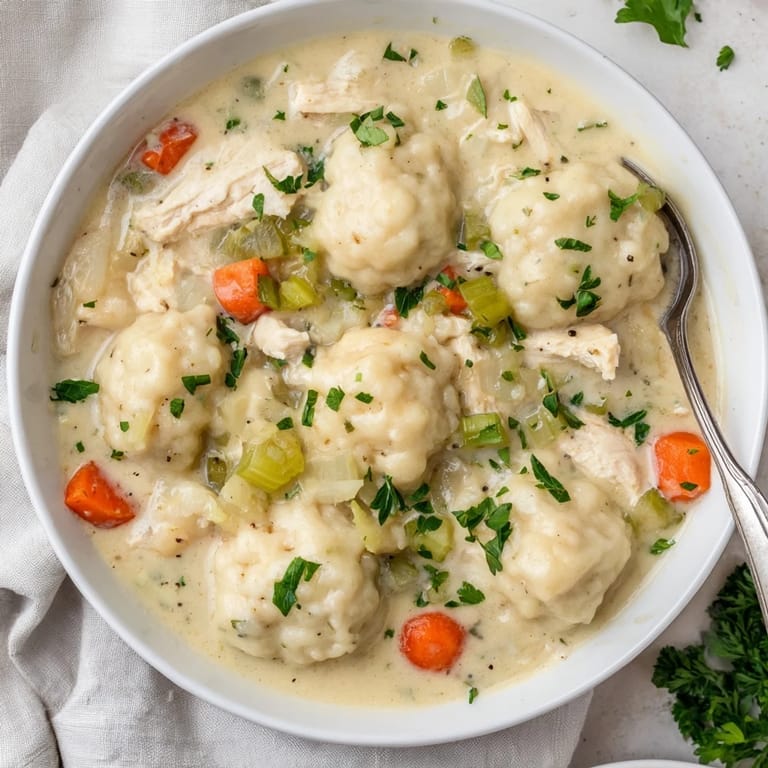
Save My neighbor texted me at 7pm on a Tuesday, sounding completely defeated after a brutal day, and I told her to come over right now. She walked in to the smell of simmering chicken and herbs, took one look at the pot on the stove, and actually teared up a little. We ate standing up in the kitchen because neither of us could wait to sit down, and she told me it was exactly what she needed, which I think is the highest compliment any comfort food can receive.
Getting The Texture Right
The most common mistake people make with dumplings is overworking the dough, which leads to tough, hockey puck-like results instead of the fluffy clouds you want. Mix the dumpling ingredients just until they come together, leaving some dry spots visible, because those will hydrate as the dumplings steam. The dough should look messy and rough, not smooth like bread dough, so trust the process and resist your instincts to keep stirring.
Make It Your Own
Sometimes I add a splash of white wine to the broth after cooking the vegetables, which gives the stew a subtle brightness that cuts through all that richness. You can also throw in some frozen corn or green beans along with the peas, or use half-and-half instead of heavy cream if you want something slightly lighter. The recipe is forgiving, which is probably why grandmothers have been making variations of it forever.
Serving Suggestions
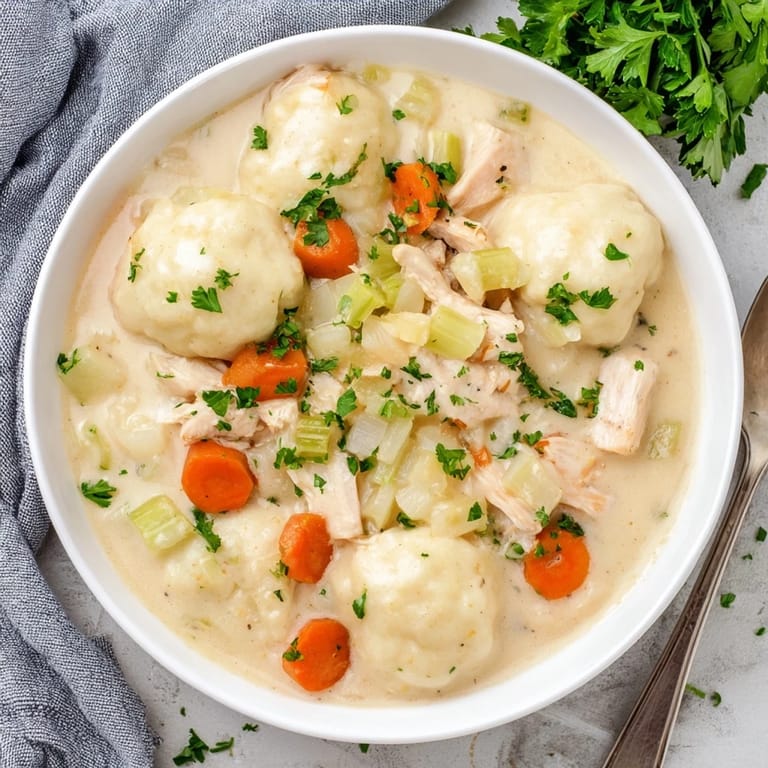
This dish is practically a meal on its own, but a simple green salad with a bright vinaigrette cuts through the richness beautifully. Crusty bread is also nice for soaking up every last drop of that incredible broth, though honestly, the dumplings pretty much handle that job already. I like to serve it in shallow bowls so everyone gets plenty of those prized dumplings floating on top.
- A crisp white wine like Sauvignon Blanc pairs surprisingly well with all the creamy elements
- Leftovers keep beautifully in the fridge for up to three days and actually taste better reheated
- If you somehow have leftovers, freeze them without the dumplings and make fresh ones when you reheat
 Save
Save There is something profoundly satisfying about making a dish that has fed families through hard winters and celebrations alike, connecting you to countless kitchens across time. Every steaming bowl is a little bit of comfort you can share with the people who matter most.
Recipe FAQs
- → Can I make this ahead of time?
You can prepare the stew portion up to 2 days in advance and refrigerate. However, dumplings are best cooked fresh, so add them when reheating to maintain their fluffy texture.
- → What cut of chicken works best?
Boneless, skinless chicken thighs are ideal because they stay tender during simmering. Breasts work too but may dry out slightly. Cut either option into large chunks before cooking.
- → Can I use self-rising flour for dumplings?
Yes, you can substitute self-rising flour for the all-purpose flour and baking powder combination. Use 2 cups self-rising flour and omit the baking powder called for in the dumpling mixture.
- → Why are my dumplings dense or heavy?
Overmixing the dough creates tough dumplings. Stir just until ingredients are combined. Also, resist lifting the lid while dumplings steam—trapping the steam is essential for fluffy results.
- → Can I freeze leftovers?
The stew freezes beautifully for up to 3 months. However, dumplings become soggy when frozen and thawed. For freezing, consider removing dumplings and making fresh ones when reheating.
- → How do I thicken the broth if it's too thin?
Simmer uncovered for 10-15 minutes to reduce liquid. Alternatively, mix 2 tablespoons cornstarch with 2 tablespoons cold water, stir into the bubbling broth, and cook until thickened.