 Save
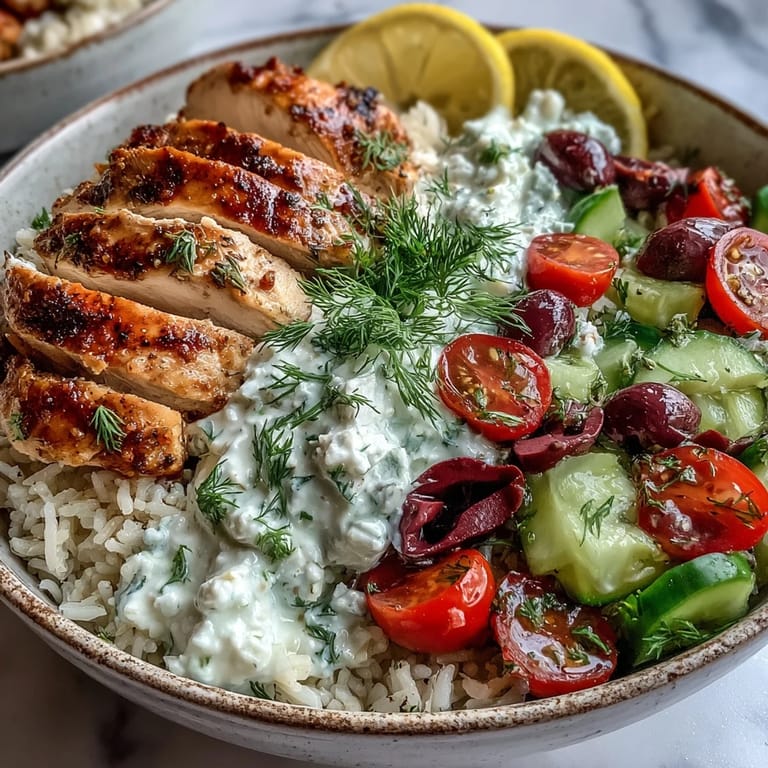
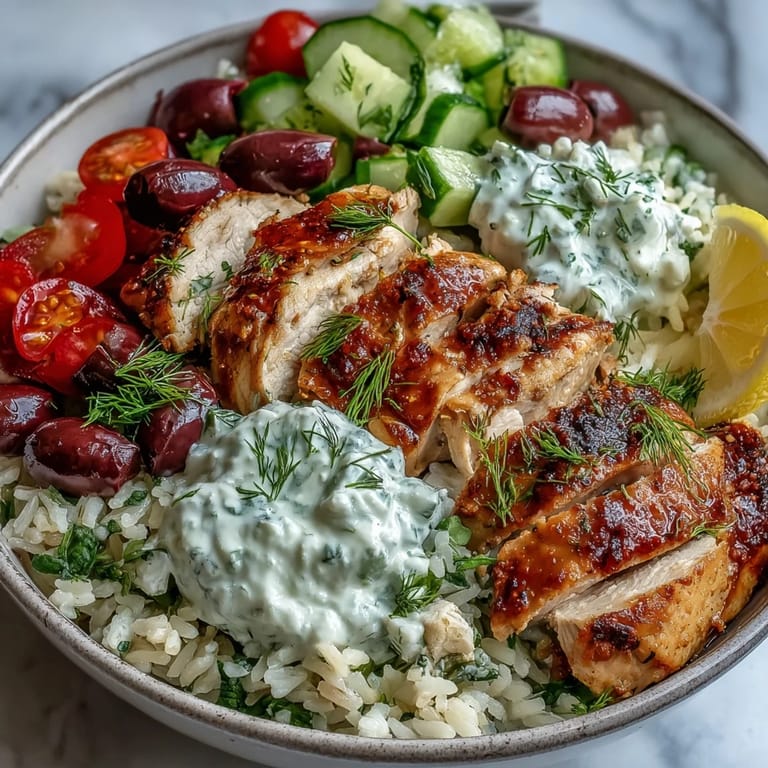
Save There's something about assembling a Greek bowl that feels less like cooking and more like building a small, edible landscape. I discovered this particular combination on a sweltering afternoon when my fridge held scattered ingredients and my appetite demanded something bright and alive. The first time I layered that warm herbed rice with cold salad and silky tzatziki, I understood why Greeks have been eating variations of this for centuries—it's not fussy, it's not complicated, but somehow every element knows exactly what it's doing.
I made this for my sister on a day when she was too exhausted to cook for herself, and watching her take that first bite—the way her shoulders relaxed—told me everything I needed to know. She came back asking for the recipe two weeks later, which never happens unless something genuinely lands.
Ingredients
- Long-grain white rice: The neutral canvas that soaks up oregano and lets everything else shine without competing for attention.
- Chicken breasts or thighs: Breasts cook faster and stay lean, but thighs are more forgiving if you're worried about dryness—I tend toward thighs on days when I'm distracted.
- Olive oil and lemon juice: These two are the backbone of the marinade, so don't skimp on quality here; it's where the magic actually starts.
- Dried oregano, cumin, and smoked paprika: This trio is non-negotiable—the oregano is the voice of Greece, while cumin and paprika add depth and warmth without shouting.
- Cherry tomatoes and cucumber: Halve the tomatoes lengthwise so they hold the dressing better, and cut your cucumber into roughly the same size pieces for visual harmony.
- Fresh dill: It's herbaceous and slightly sweet in a way that parsley isn't; don't substitute without tasting as you go.
- Kalamata olives and tzatziki: These are the salty-creamy comfort elements that make the whole bowl feel indulgent despite being genuinely wholesome.
Tired of Takeout? 🥡
Get 10 meals you can make faster than delivery arrives. Seriously.
One email. No spam. Unsubscribe anytime.
Instructions
- Rinse and toast your rice:
- Cold water over the rice until it runs clear isn't just a step—it removes excess starch so each grain stays separate. When you sauté it briefly in olive oil, you'll hear a subtle toasting sound that means the flavors are already building.
- Build the marinade:
- Whisk everything together until it looks emulsified and smells like a Greek island—this is the moment where the raw ingredients stop being separate things and become a cohesive flavor. Let the chicken swim in this for at least 15 minutes; longer in the fridge is even better if you have time.
- Cook the chicken with confidence:
- Medium-high heat, don't move it around constantly—let it develop color and crust on the first side before you flip. After cooking, let it rest for 5 minutes so the juices redistribute and it stays moist when you slice.
- Toss the salad gently:
- This isn't the time to be aggressive; the tomatoes are delicate and you want the dressing to coat everything without bruising the vegetables. Taste and adjust the salt and vinegar—this is where you calibrate the tartness.
- Assemble with intention:
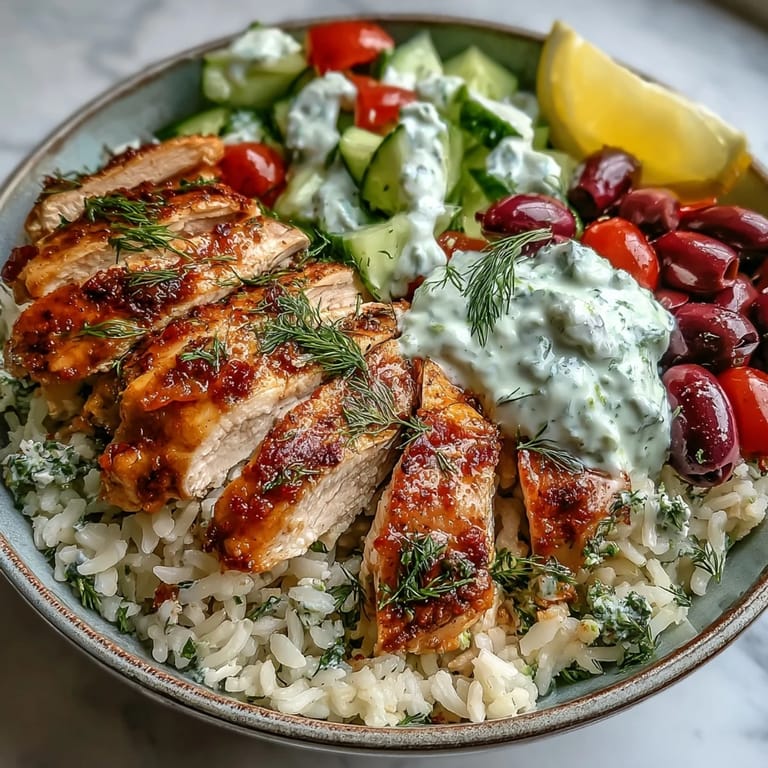
- Start with warm rice as your base so it gets slightly softened by the salad's dressing, then layer everything else cold on top. The temperature contrast is part of why this works.
 Save
Save This dish became something more than dinner one weeknight when my neighbor stopped by and smelled the oregano and lemon from my kitchen. She came in, sat down, and we ate together in almost complete silence, which felt like the highest compliment a bowl of food could receive.
Why Temperature Contrast Makes This Work
The magic of this bowl lives partly in the interplay between warm rice and cold salad. The warmth of the rice actually slightly softens the cucumber and tomato while they cool everything down—it's a dance that wouldn't happen if everything was the same temperature. I noticed this by accident once when I assembled the bowl and then waited too long before eating, and by the time I got to it, everything had equalized to lukewarm and felt less alive somehow.
The Olive Question
Kalamata olives are traditional, but they're also assertively salty and briny in a way that can take over if you're not careful. I've started pitting and halving them to distribute the flavor more evenly across the bowl rather than encountering whole olive bombs with every other bite. Some people skip them entirely and use crumbled feta instead, which softens the salinity and adds a creamy texture.
Variations and Swaps That Actually Work
This bowl is flexible in a way that feels intentional rather than improvised. The bones are strong enough that you can change things without losing the soul of the dish, but some swaps work better than others. When I've made it with grilled shrimp, I reduce the cooking time to about three minutes per side and the whole meal feels lighter and more summery; with chickpeas, I roast them with the same spice mixture and it becomes vegetarian without losing any richness.
- Grilled shrimp or white fish: Use the same marinade but cut the cooking time to three minutes per side so they stay tender and juicy.
- Crumbled feta: Add this instead of or alongside the tzatziki if you want a drier, saltier cheese element that crumbles through the rice.
- Roasted chickpeas: Toss them in the chicken spice mixture and roast at 400 degrees for about 25 minutes until crispy for a vegetarian protein that actually satisfies.
 Save
Save This bowl has become my reliable answer to the question of what to eat when I want something nourishing but not boring. It's the kind of recipe that works for a quick lunch, an impressive dinner, or meal prep containers that taste better the next day when the dressing has had time to fully settle in.
Recipe FAQs
- → Can I make this bowl ahead of time?
Yes, you can prepare the herbed rice, tomato-cucumber salad, and marinated chicken up to 24 hours in advance. Store components separately in the refrigerator. Grill the chicken just before serving and assemble bowls fresh.
- → What can I use instead of tzatziki?
For a dairy-free option, try hummus or a tahini-lemon drizzle. If you enjoy garlic sauce, a homemade skhug or toum would complement the Greek flavors beautifully. A simple yogurt-lemon dip with chopped cucumber works as well.
- → How do I know when the chicken is cooked through?
The chicken is done when the internal temperature reaches 165°F (74°C). Look for golden-brown grill marks and juices that run clear when you cut into the thickest part. Let the chicken rest for 5 minutes before slicing to keep it juicy.
- → Can I cook the chicken differently?
Absolutely! You can bake the marinated chicken at 400°F for 20-25 minutes, or cook it on an outdoor grill for authentic smoky flavor. For extra convenience, use a rotisserie chicken shredded into bowls.
- → What vegetables can I add to this bowl?
Consider adding roasted red peppers, grilled zucchini, or sliced red bell peppers for sweetness. Fresh spinach or arugula makes a great base under the rice. Grilled eggplant pairs wonderfully with the Greek flavors too.
- → Is this bowl freezer-friendly?
The cooked chicken and herbed rice freeze well separately for up to 3 months. Avoid freezing the tomato-cucumber salad or olives, as texture will suffer. Thaw overnight in the refrigerator and reheat chicken gently before assembling.