 Save
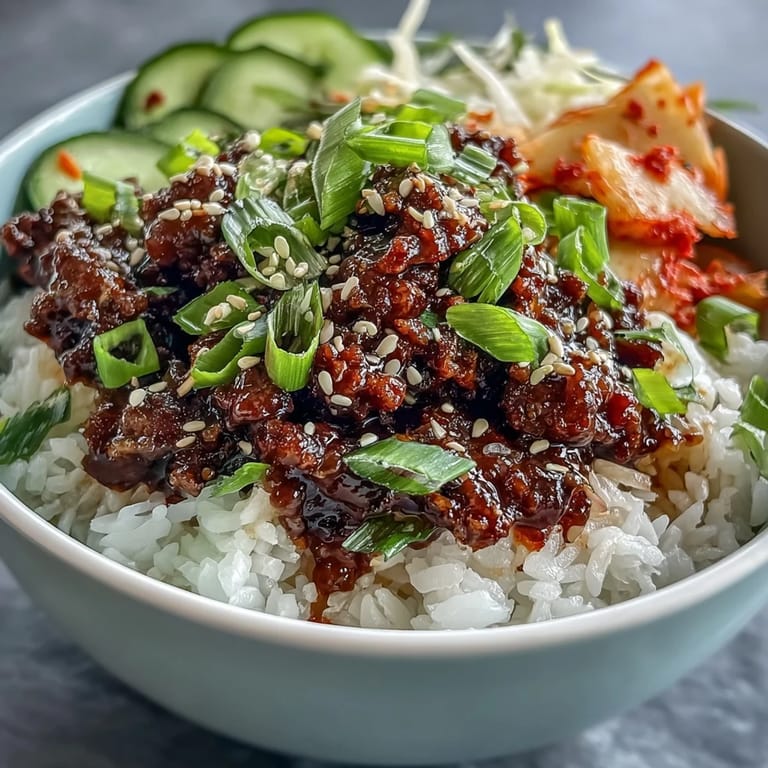
Save There's a particular kind of magic that happens when you're standing in front of your stove at dinnertime, hungry and impatient, and you realize you can have something spectacular on the table in less than 40 minutes. That's when Korean beef bowls became my weeknight salvation. The first time I made one, I was genuinely surprised by how the gochujang sauce transformed simple ground beef into something so deeply satisfying, layered with heat and umami that made my taste buds sit up and pay attention. What started as an experiment with ingredients I found at the grocery store turned into the kind of meal I now make almost weekly.
I remember making this for a friend who was going through a rough patch, and she showed up at my door looking completely drained. About halfway through her bowl, something shifted—she started asking questions about the different flavors, picking out the pickled radish to taste it alone, laughing at how the heat built slowly rather than hitting all at once. By the end, she was asking for the recipe, and that's when I understood that this simple bowl had somehow become a small moment of care.
Ingredients
- Lean ground beef (1 lb): Use the leanest ground beef you can find because the sauce is rich enough on its own, and excess fat will make the final dish feel heavy rather than vibrant.
- Gochujang (3 tbsp): This fermented chili paste is non-negotiable—it's the heart of everything, delivering depth and complexity that you simply cannot replicate with regular chili powder or sriracha alone.
- Toasted sesame oil (1 tsp): A little goes a very long way, and toasting it yourself in a dry pan for 30 seconds before using elevates the entire dish.
- Rice vinegar (1 tbsp for beef, 1/2 cup for vegetables): The vinegar in the sauce cuts through richness, while the pickled vegetables become your palate cleanser between bites.
- Fresh ginger and garlic: Never skip the fresh versions here—they create an aromatic foundation that transforms the beef from plain to unforgettable.
- Green onions (2 whole): Split them between the cooking process and the garnish so you get both cooked-down sweetness and raw, fresh bite.
- Kimchi and cucumber: These are your texture and temperature contrast—without them, the bowl loses its personality and becomes one-note.
Tired of Takeout? 🥡
Get 10 meals you can make faster than delivery arrives. Seriously.
One email. No spam. Unsubscribe anytime.
Instructions
- Start your pickles early:
- Mix rice vinegar, sugar, and salt in a small bowl and stir until the sugar and salt completely dissolve. Add your julienned carrot and daikon radish, then set it aside while you handle the beef—the vegetables will soften just enough to be tender but still have a slight bite to them.
- Bloom your aromatics:
- Heat oil in your skillet over medium-high heat until it shimmers slightly, then add minced garlic and ginger. You'll know it's ready when the smell hits you—that's when you add the beef and break it into small pieces as it browns, which takes about 5 to 6 minutes total.
- Build the sauce:
- Once the beef is fully cooked through and browned, stir in gochujang, soy sauce, brown sugar, rice vinegar, and sesame oil. Let this simmer for 2 to 3 minutes, watching how the sauce clings to each piece of beef and deepens in color.
- Finish with green onions:
- Remove from heat and stir in half of your sliced green onions, which will soften slightly from the residual heat while keeping some of their sharpness.
- Assemble with intention:
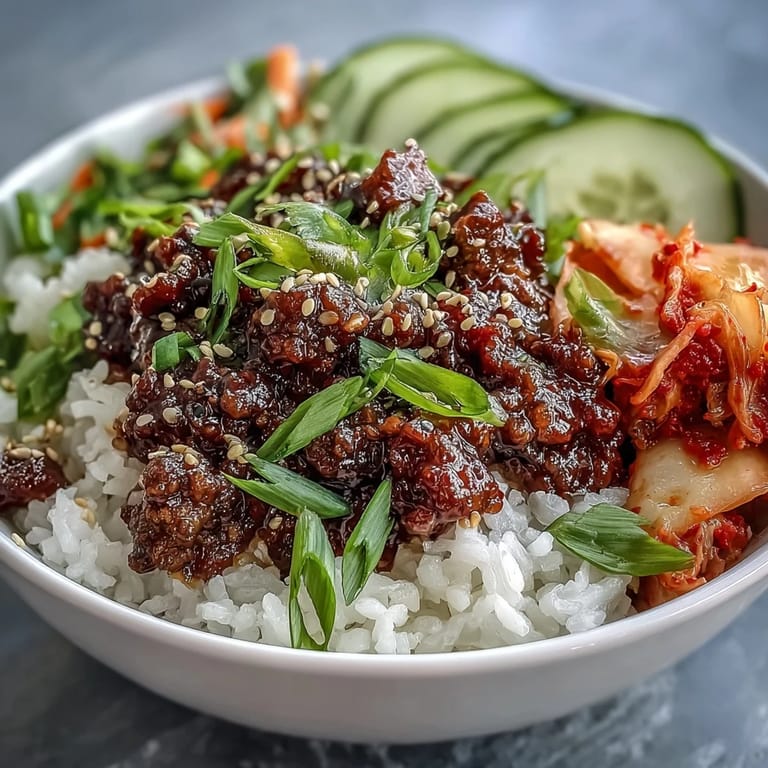
- Divide warm rice among bowls, then top each with a generous portion of the beef mixture. Arrange your pickled vegetables, fresh cucumber, radish, and kimchi around the beef in sections so people can taste all the components together or adjust the ratio to their preference.
- Garnish and serve immediately:
- Sprinkle remaining green onions and toasted sesame seeds over top, then serve right away while the rice is still steaming and warm.
 Save
Save One evening, my partner came home and found me standing in the kitchen with five different bowls lined up, each one slightly different—one with extra gochujang, one with sriracha, one with even more kimchi. We tasted through them like we were judges at some ridiculous competition, and ended up laughing so hard we knocked over the sesame seeds. That moment made me realize this bowl had become more than just dinner; it was something we could play with together.
The Architecture of Temperature and Texture
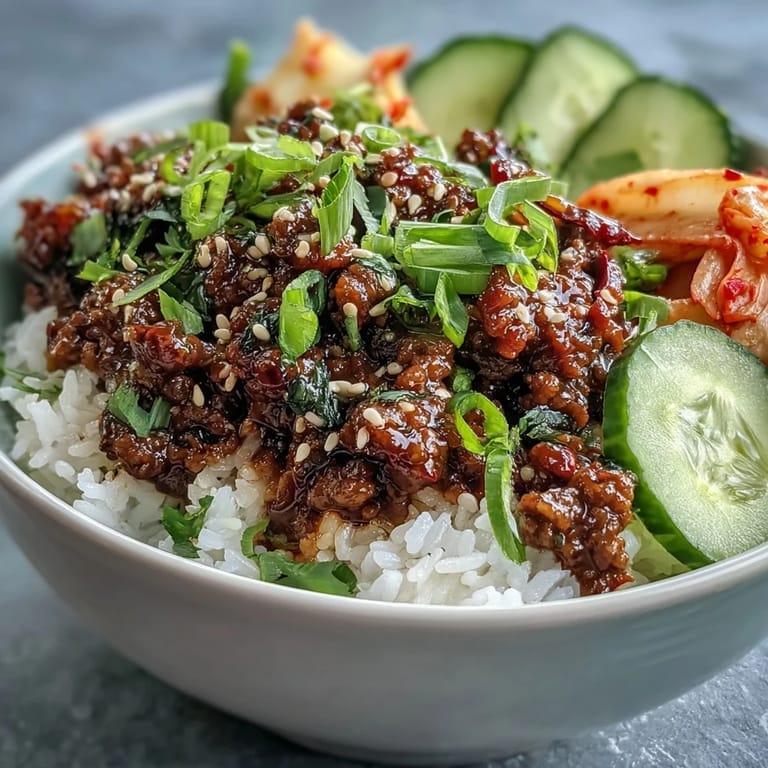
What makes this bowl work is the intentional contrast—warm beef against cool vegetables, soft rice against crisp cucumber, savory against tangy. Every element has a reason for being there, and when you eat it, you're supposed to experience all of those things together. The pickled vegetables aren't just a garnish; they're essential balance, cutting through the richness of the sauce and beef so you never feel weighed down, no matter how much you eat.
Playing with Heat Levels
Gochujang has a particular kind of heat that builds slowly rather than attacking immediately, which means you can actually taste everything else in the bowl before the spice makes itself known. If you like things spicier, add sriracha or extra gochujang, but go slowly because once it's in there, it's in there. I've learned that people who think they don't like spicy food often surprise themselves with this bowl because the heat is friendly rather than punishing.
Making It Your Own
This bowl is forgiving and flexible in the best ways possible—you can swap ground beef for ground chicken or turkey without changing a single other ingredient, and it works beautifully. For a gluten-free version, use tamari instead of soy sauce and make absolutely sure your gochujang is labeled gluten-free. The beauty of a bowl like this is that it's a template rather than a rigid rule.
- If you want to prep ahead, cook the rice and pickled vegetables in the morning, then all you need to do at dinner is brown the beef and assemble.
- Keep extra gochujang on the table so people can add more heat to their own bowl without affecting everyone else's experience.
- Leftover beef (without the rice) keeps in the fridge for 3 days and works wonderfully over greens or in lettuce wraps the next day.
 Save
Save This bowl has become one of those meals I turn to when I need something satisfying but not heavy, something that feels indulgent but comes together in the time it takes to cook rice. It's the kind of recipe that makes you feel like you're taking care of yourself, one flavorful spoonful at a time.
Recipe FAQs
- → Can I make this dish less spicy?
Reduce the amount of gochujang to 1-2 tablespoons or choose a mild variety. You can also add a drizzle of honey or extra brown sugar to balance the heat.
- → What protein alternatives work well?
Ground chicken, turkey, or even crumbled tofu make excellent substitutes for beef while still absorbing all the bold Korean flavors beautifully.
- → How long do pickled vegetables keep?
The quick-pickled carrots and daikon will stay fresh in the refrigerator for up to one week when stored in an airtight container.
- → Can I prepare components in advance?
The pickled vegetables can be made a day ahead, and the beef mixture reheats beautifully. Store components separately and assemble when ready to serve.
- → What can I serve alongside this bowl?
Miso soup, a simple green salad with sesame dressing, or steamed bok choy make lovely accompaniments. A crisp lager or chilled green tea pairs perfectly.
- → Is this suitable for meal prep?
Absolutely. Portion the beef, rice, and vegetables into separate containers for up to 4 days. Reheat the beef and rice gently, then add fresh toppings before serving.