 Save
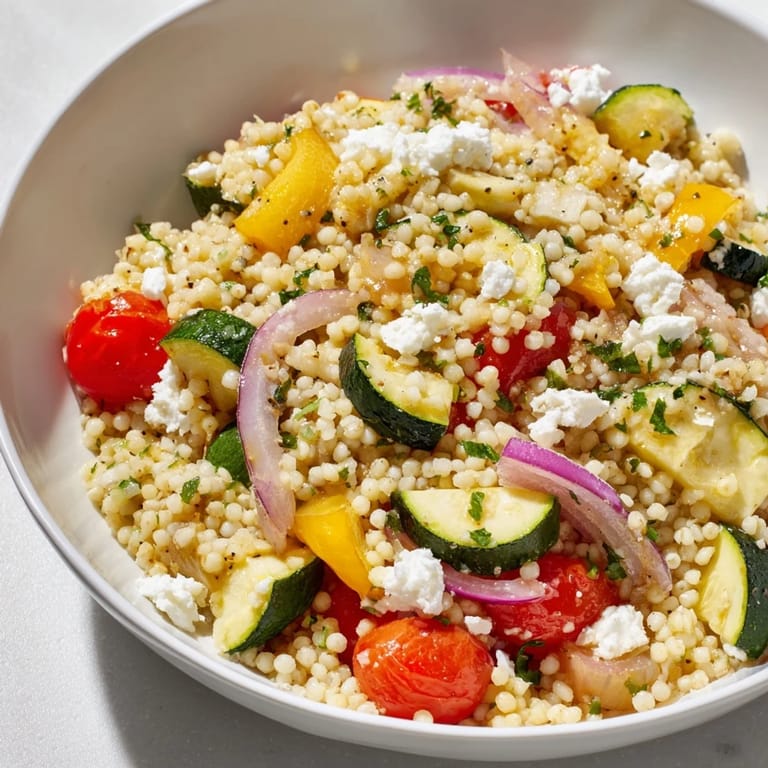
Save My friend showed up one Thursday evening with a bag of vegetables she'd grabbed at the market on impulse, no plan in mind. We stood in my kitchen wondering what to make that felt bright and filling without turning on the stove for hours. That's when I remembered a couscous salad I'd tossed together once before, roasted vegetables tumbling over fluffy grains with lemon cutting through the sweetness. We opened a bottle of wine, cranked the oven, and by the time everything came together, the whole apartment smelled like caramelized peppers and fresh herbs.
I brought this salad to a potluck once and watched someone I barely knew go back for thirds. She asked for the recipe on a napkin because she didn't want to forget it by the time she got home. That moment reminded me how food becomes a conversation starter, how a simple dish can make you feel generous without even trying. I've made it for picnics, weeknight dinners, and lazy Sunday lunches when I want something that feels special but doesn't demand much from me.
Ingredients
- Zucchini: It releases moisture as it roasts, so dicing it into even pieces helps everything cook at the same rate and keeps it from turning mushy.
- Red and yellow bell peppers: These bring sweetness and color, and roasting them until the edges char just slightly makes them taste almost candy-like.
- Red onion: Cut into wedges so they hold their shape in the oven and develop a mild, caramelized flavor that mellows out the sharpness.
- Cherry tomatoes: Halving them lets their juices concentrate and mingle with the olive oil, creating little pockets of tangy sweetness.
- Couscous: It cooks in minutes and soaks up the vegetable broth beautifully, turning into a fluffy base that holds the dressing without getting soggy.
- Vegetable broth: This adds a layer of savory depth that plain water just can't match, and it's a small step that makes a noticeable difference.
- Lemon juice and zest: The zest brings bright, aromatic oil that wakes up every other flavor, while the juice cuts through the richness of the olive oil.
- Dijon mustard: It emulsifies the dressing and adds a subtle tang that balances the honey without making the salad taste like a sandwich.
- Garlic: Minced finely so it disperses evenly and doesn't overpower, just whispers in the background.
- Honey or maple syrup: A small amount rounds out the acidity and helps the dressing cling to the couscous and vegetables.
- Fresh parsley and mint: Chopped just before tossing so they stay vibrant and fragrant, lifting the whole dish with green, herbal notes.
- Feta cheese: Crumbled on top for salty, creamy contrast, though you can skip it entirely and the salad still feels complete.
- Toasted pine nuts or almonds: These add crunch and a nutty richness that makes each bite more interesting.
Tired of Takeout? 🥡
Get 10 meals you can make faster than delivery arrives. Seriously.
One email. No spam. Unsubscribe anytime.
Instructions
- Preheat and prep the pan:
- Set your oven to 425°F and line a baking sheet with parchment paper so nothing sticks and cleanup stays easy. This high heat is what gives the vegetables those crispy, caramelized edges.
- Toss the vegetables:
- Combine zucchini, bell peppers, red onion, and cherry tomatoes in a bowl with olive oil, salt, and pepper, then spread them in a single layer on the prepared sheet. Make sure they're not crowded, or they'll steam instead of roast.
- Roast until tender:
- Slide the pan into the oven and roast for 20 to 25 minutes, stirring halfway through so everything cooks evenly. You'll know they're ready when the edges are golden and the tomatoes have started to collapse.
- Cook the couscous:
- Bring vegetable broth to a boil, then stir in couscous, olive oil, and salt before removing the pan from the heat. Cover it and let it sit undisturbed for 5 minutes, then fluff with a fork to separate the grains.
- Whisk the dressing:
- In a small bowl, combine lemon juice, zest, olive oil, Dijon mustard, minced garlic, honey or maple syrup, salt, and pepper. Whisk until smooth and emulsified so it coats everything evenly.
- Combine and toss:
- Transfer the couscous and roasted vegetables to a large bowl, add the parsley and mint, then pour the dressing over the top. Toss gently until everything is coated and the flavors start to mingle.
- Finish and serve:
- Sprinkle crumbled feta and toasted nuts over the salad just before bringing it to the table. Serve it warm, at room temperature, or even chilled the next day.
 Save
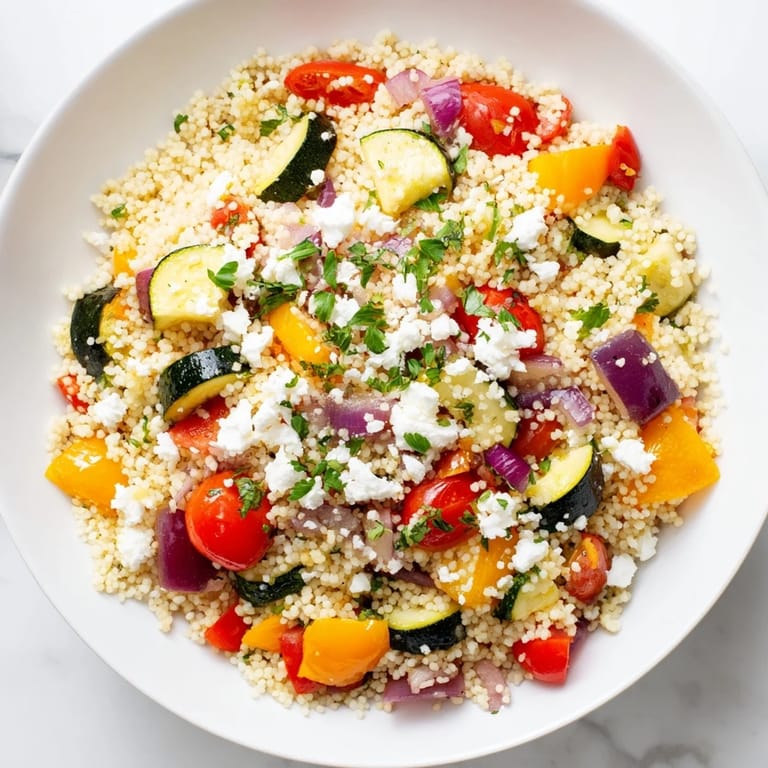
Save One summer evening, I made this salad for a small gathering in the backyard and watched people eat it straight from the bowl, standing around the table with forks in hand. No one bothered with plates at first because it felt too good to wait. That's when I realized this dish doesn't need a formal setting or a special occasion, it just needs people who are hungry and a little bit of sunlight.
Making It Your Own
This salad is forgiving and adaptable, so if you have eggplant, asparagus, or even cauliflower in the fridge, toss them in with the other vegetables. I've added canned chickpeas straight from the pantry when I needed more protein, and I've swapped the feta for cubes of grilled halloumi when I wanted something heartier. The lemon dressing stays the same, but you can adjust the sweetness or acidity depending on your mood and what feels right that day.
Storing and Serving Later
I've found this salad keeps well in the fridge for up to two days, though the herbs will lose some of their brightness and the vegetables will soften slightly. If you're making it ahead, hold off on adding the feta and nuts until just before serving so they don't get soggy or lose their texture. Let it come to room temperature for about twenty minutes before eating, or enjoy it cold straight from the container if that's what the moment calls for.
Pairing and Serving Ideas
This salad works beautifully alongside grilled chicken, lamb kebabs, or a piece of seared fish, but it also stands on its own as a light lunch or dinner. I've served it with warm pita bread and hummus when I wanted something more filling, and I've paired it with a crisp white wine on evenings when I just wanted to sit outside and unwind. It's one of those dishes that doesn't demand much from you but gives back more than you expect.
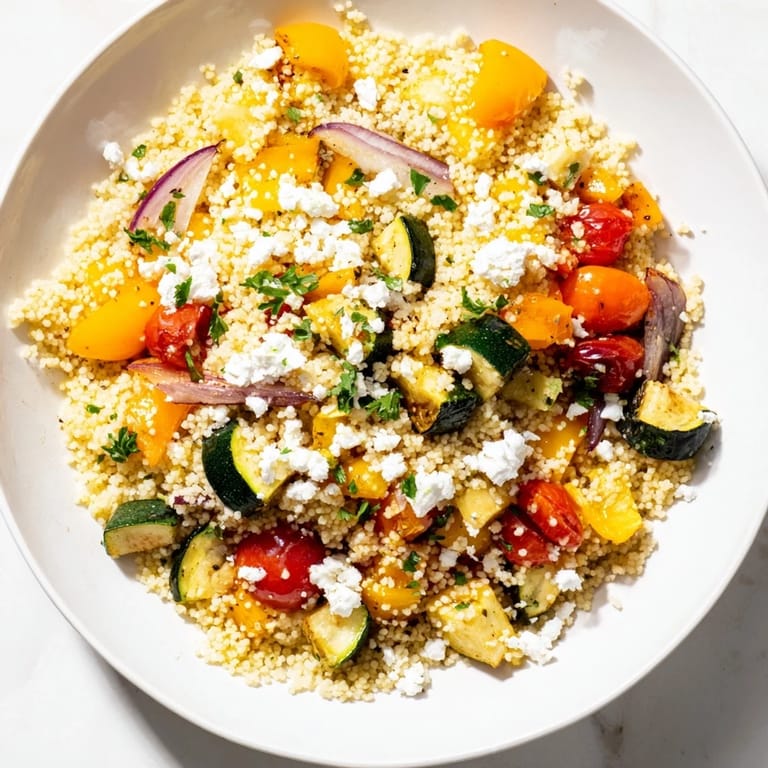
- Serve it in a shallow bowl so the colors show through and people can see all the roasted vegetables.
- If you're taking it somewhere, pack the dressing separately and toss everything together right before serving.
- Leftovers make an excellent grain bowl base with a fried egg on top for breakfast.
 Save
Save This salad has become one of those recipes I turn to when I want something nourishing without spending hours in the kitchen. It reminds me that good food doesn't have to be complicated, just thoughtful and made with a little care.
Recipe FAQs
- → Can I prepare this salad ahead of time?
Yes, this salad keeps well in the refrigerator for up to 2 days. Store components separately if possible—keep dressing in a separate container and add it just before serving to prevent the couscous from becoming too soft. Add fresh herbs and toppings right before serving for best texture.
- → What vegetables can I substitute?
Feel free to swap based on seasonal availability. Eggplant, asparagus, broccoli, or mushrooms work wonderfully. Cut everything to similar sizes for even roasting. Keep the total volume around 4-5 cups of vegetables.
- → How do I make this vegan?
Simply omit the feta cheese or replace it with a plant-based alternative like dairy-free cashew cheese. All other ingredients are naturally vegan-friendly. The nuts and dressing are already vegan, making this an easy adaptation.
- → Can I use regular couscous instead of pearl couscous?
Yes, regular couscous works perfectly fine. Use a 1:1 ratio of couscous to liquid and follow the same cooking method—bring liquid to a boil, add couscous, remove from heat, cover, and let sit 5 minutes.
- → What's the best way to serve this?
This salad is delicious served warm, at room temperature, or even chilled. For best flavor, serve within a few hours of assembly. If serving cold, let it come out of the fridge 15 minutes before serving and give it a quick toss with a splash of extra dressing.
- → How can I add more protein?
Stir in cooked chickpeas, white beans, or lentils for plant-based protein. Alternatively, serve alongside grilled chicken, baked fish, or halloumi cheese for additional protein options.